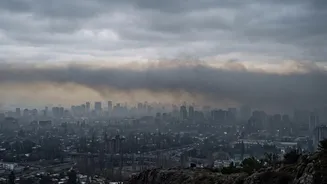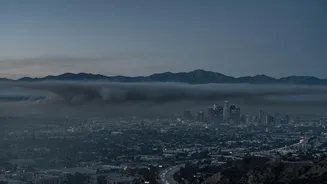







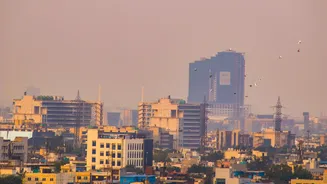
Ever noticed how the air feels heavier and hazier after sunset? It’s not your imagination. Air quality often deteriorates at night, and there's a clear scientific reason for it. Understanding this phenomenon is the first step to protecting your health.
The Science of the Nightly Smog
The main reason pollution gets trapped at night is a phenomenon called a temperature inversion. During a normal day, the sun warms the ground, which in turn warms the layer of air closest to it. This warm air is less dense, so it rises, carrying pollutants up and away into the upper atmosphere where they can disperse. This process happens within what scientists call the atmospheric boundary layer, which can be a kilometre deep during the day. However, once the sun sets, the ground begins to cool down rapidly. This cools the air near the surface, making it colder and denser than the layer of air immediately above it.
An Invisible Lid on the Air
This setup, with cool air trapped below a layer of warmer air, is a temperature inversion. The warmer air acts like an invisible lid, preventing the cooler, denser air from rising. Because of this, pollutants from vehicle exhaust, industrial emissions, and other sources that are released near the ground can no longer mix vertically and escape. Instead, they become concentrated in this shallow layer of air close to where we live and breathe. This atmospheric boundary layer, which was deep during the day, can shrink to just 100 metres deep at night, effectively trapping and concentrating the day's pollution.
Calmer Winds Mean Higher Concentrations
Compounding the problem is the fact that winds also tend to die down at night. During the day, solar heating creates air pressure differences that generate winds, which help to blow pollutants away. At night, with cooler and more stable atmospheric conditions, wind speeds often decrease. Without strong winds to disperse them horizontally, pollutants accumulate in the same area where they were emitted. The combination of a temperature inversion trapping them vertically and calm winds preventing them from scattering horizontally leads to a significant spike in pollution readings, especially for particulate matter like PM2.5 and PM10.
Your Toolkit for Tracking Pollution
Given that pollution levels can change drastically, especially between day and night, staying informed is crucial for protecting your health. Fortunately, technology makes it easy to monitor the Air Quality Index (AQI) in your specific area. The AQI is a colour-coded scale that helps you understand what the air quality means for your health. Using a reliable app on your smartphone is the most convenient way to get real-time, hyperlocal data before you step outside.
Key Apps and Websites for India
For the most reliable information in India, it's best to use government-backed sources. The SAMEER app, from the Central Pollution Control Board (CPCB), provides hourly AQI data for over 100 cities and even allows you to file complaints about pollution sources. Another excellent government tool is SAFAR (System of Air Quality and Weather Forecasting and Research), which offers detailed forecasts for major metro areas like Delhi, Mumbai, and Pune. Other popular and comprehensive thirdparty apps include IQAir AirVisual, which provides global data and forecasts, and Google Maps, which has integrated an air quality layer showing realtime readings across India.
Making Sense of the AQI Numbers
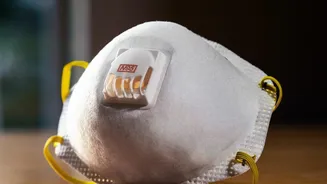
Understanding the numbers is as important as tracking them. The AQI scale is broken into categories. An AQI between 0–50 is 'Good'. 51–100 is 'Satisfactory'. As numbers rise, so does the health risk. 101–200 is 'Moderate', where sensitive groups might feel effects. 'Poor' (201–300) and 'Very Poor' (301–400) can cause respiratory illness to the general public. Anything above 401 is 'Severe' and can seriously impact even healthy individuals. By checking the AQI, especially in the mornings and evenings, you can decide whether it’s safe to exercise outdoors, if you need to wear a mask, or if it's better to keep windows closed and use an air purifier.