







What Are Slow Negative Pull-Ups?
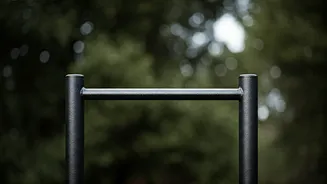
A negative pull-up, also known as an eccentric pull-up, isolates the lowering portion of the movement. [8] Instead of pulling yourself up, you start with your chin already over the bar and then lower your body as slowly and with as much control as possible.
[1] This focuses on the eccentric contraction, where the muscle lengthens under tension. [5] Because our muscles can handle significantly more load in the eccentric phase (up to 1.5 times more), this method allows you to train with your full bodyweight even if you can't yet perform the concentric (pulling up) part of the exercise. [3, 12] It's a game-changer for building foundational strength.
The Undeniable Strength Benefits
Mastering the slow negative pull-up is one of the fastest routes to achieving your first full pull-up. [1, 3] This technique directly builds strength in the primary pulling muscles, including the latissimus dorsi (lats), biceps, rhomboids, and traps. [2, 14] It also intensely recruits secondary muscles in the forearms and core, dramatically improving grip strength and stability. [1, 10] The increased time under tension during a slow descent creates significant mechanical stress on the muscle fibers, which is a powerful stimulus for both strength and muscle growth. [5, 8] Furthermore, controlled eccentric loading is excellent for strengthening tendons, which can help 'bulletproof' your elbows and shoulders against injury. [3]
Your Step-by-Step Guide to Perfect Form
Proper form is non-negotiable for safety and effectiveness. Use a stable pull-up bar. [7] 1. Get to the Top: Place a sturdy box or bench underneath the bar. Use it to step or jump into the top position, with your chin clearly above the bar. [1] Grip the bar with your palms facing away (overhand grip), slightly wider than your shoulders. [7] 2. Engage Your Back: Before you lower, squeeze your shoulder blades together and down, as if tucking them into your back pockets. [18] Keep your chest proud. [7] 3. Control the Descent: This is the most crucial part. Lift your feet off the box and begin to lower your body, fighting gravity every inch of the way. Aim for a slow, 3- to 5-second descent. [1, 7] 4. Full Range of Motion: Continue lowering until your arms are fully straight in a 'dead hang' position at the bottom. [1] This ensures you build strength through the entire movement path. [21] 5. Reset and Repeat: Step back onto the box to safely get back to the top position. Do not use momentum. [7] Each repetition should be a fresh, controlled start.
Common Mistakes to Avoid
One of the biggest mistakes is dropping too fast. If you're down in less than two seconds, you're just falling; you're not building strength. [7, 15] Always prioritize a slow, controlled tempo. Another common error is letting your shoulders shrug up towards your ears. [11] This puts undue stress on the shoulder joints and disengages the lats. Keep your shoulders packed down throughout the movement. Finally, don't use momentum or swing your body. [19] The goal is to build pure eccentric strength, which requires a tight core and a stable, controlled body position from top to bottom. [7]
Programming for Progress
Consistency is the key to seeing results. Aim to perform negative pull-ups two to three times per week, allowing for at least one rest day in between for recovery. [11] Start with a manageable volume, such as 3 sets of 3-5 high-quality reps, resting for 90-120 seconds between sets. [16, 17] The main goal for progression isn't just more reps, but increasing the time under tension. [11] Once a 5-second negative feels manageable for all reps and sets, work on extending it to 7 or 8 seconds. [7] When you can confidently control a 10-second negative, you are very close to achieving your first full pull-up. [3] Be sure to supplement your training with other pulling exercises like inverted rows to build a well-rounded back. [16]