




The Zero-Gravity Mealtime Challenge
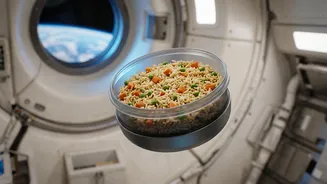
Eating in space is far more complicated than simply packing some food. In a microgravity environment, the normal rules of physics don't apply. Crumbs from a piece of bread or a biscuit don't fall to the floor; they float. These floating particles can
get into an astronaut's eyes or, more dangerously, clog critical ventilation and electronic systems. For this reason, crumbly foods like bread are often excluded from space menus. Liquids are equally tricky. A spilled drink won't just make a mess; it will disperse into a cloud of floating globules that can cause short circuits. Astronauts must drink from specially designed containers, often using straws that prevent any liquid from escaping. The act of eating itself changes. Without gravity, food has to be carefully managed to prevent it from floating away, and even the body's digestive processes can be altered.
More Than Just Calories
The physiological demands on an astronaut's body are immense. Living in microgravity leads to a host of health issues that nutrition must help counteract. Astronauts experience significant muscle and bone density loss because their bodies aren't working against gravity. This condition is similar to osteoporosis on Earth, but it occurs much faster. To combat this, space diets need to be carefully formulated with adequate calcium and Vitamin D. However, the body's ability to absorb calcium decreases in space, making it a complex problem to solve. Furthermore, astronauts often experience a negative energy balance, meaning they don't consume enough calories, leading to weight loss. The psychological role of food is also crucial. On long, isolated missions, familiar and flavourful food can be a significant morale booster, helping astronauts cope with the stress of space travel.
India's Cosmic Kitchen: The DFRL Solution
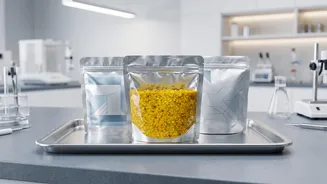
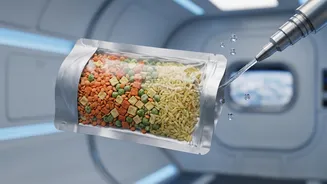
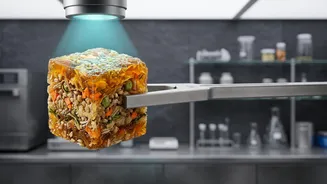
For the Gaganyaan mission, the responsibility of creating a suitable menu falls to the Defence Food Research Laboratory (DFRL) in Mysuru, a lab under the DRDO. With extensive experience in developing specialized food for soldiers in extreme conditions, DFRL is uniquely qualified for this task. The lab has developed a menu of around 30 Indian dishes tailored for space. The food is prepared using technologies like thermostabilization (heating to kill spoilers) and is packed in ready-to-eat, dehydrated forms. Astronauts will rehydrate these meals by injecting water into the packets. The meals are designed to be low-fragmentation to avoid the problem of floating crumbs. DFRL is also developing essential equipment, including food heaters, special liquid containers, and waste disposal systems to manage leftovers.
A Taste of Home, 400 Kilometres Up
The menu for India's astronauts will offer a comforting taste of home. DFRL has curated a list that includes popular dishes from across the country, ensuring variety and palatability. For breakfast, astronauts might have idli-sambar or upma. Lunch and dinner options include chicken biryani, vegetable pulav, egg rolls, chapatis, and chicken korma. Even desserts like moong dal halwa and suji halwa are on the menu. The spice levels are kept moderate, but with an option for astronauts to add extra spice sachets if they prefer. This thoughtful approach ensures that while the astronauts are undertaking a historic mission far from home, they can still enjoy the familiar and comforting flavours of Indian cuisine, from dal khichdi to vegetable rolls.