



Why Precision Is Not Just for Pros
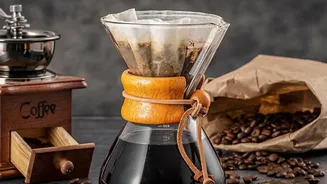
Brewing coffee is a process of extraction. When hot water meets coffee grounds, it dissolves flavour compounds like acids, sugars, and oils. The amount of water you use determines how well this process works. Too much water for the amount of coffee can
lead to a weak, watery, or even sour cup, a sign of under-extraction. Conversely, too little water can result in an overly concentrated, harsh, and bitter brew, which indicates over-extraction. Your water-to-coffee ratio, therefore, is the single most important variable you can control to ensure your coffee tastes balanced and flavourful every single time. It controls the strength and body of your final cup, allowing the unique notes of your beans to shine through.
The Golden Ratio: Your Starting Point
In the coffee world, the 'golden ratio' is a widely accepted starting point for brewing. While recommendations vary slightly, this ratio generally falls between 1:15 and 1:18—that is, one part coffee to 15 to 18 parts water, measured by weight. Many coffee professionals and organisations, including the Specialty Coffee Association (SCA), point to a ratio of about 1:18, which translates to 55 grams of coffee per litre of water. However, many home brewers find a slightly stronger ratio, like 1:16 or 1:17, to be a perfect middle ground. Think of this ratio not as a strict rule, but as a reliable baseline from which you can adjust to suit your personal taste.
The Best Tool for the Job: A Digital Scale
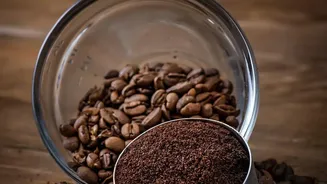
The most accurate and consistent way to measure your coffee and water is by using a digital kitchen scale. Measuring by weight (in grams) eliminates the guesswork that comes with measuring by volume (with scoops or cups). A tablespoon of a dense, light-roast coffee will weigh more than the same tablespoon of a lighter, dark-roast coffee. Similarly, whole beans and ground coffee occupy different volumes. A scale ensures that 20 grams of coffee is always 20 grams, regardless of the bean type, roast level, or grind size, giving you repeatable results every morning. Since one millilitre of water weighs one gram, you can place your mug or carafe on the scale, zero it out, and pour your hot water directly for perfect accuracy.
No Scale? No Problem
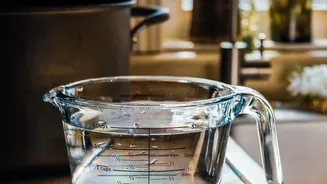
If you don't have a scale, you can still achieve a more consistent brew with tools you already own. For water, a simple liquid measuring cup is a great option. To measure your coffee, the key is consistency. Choose one scoop or tablespoon and use it every single time. As a general guideline, a standard coffee scoop holds about two tablespoons, which is roughly 10-12 grams of ground coffee. A level tablespoon of ground coffee is approximately 5-6 grams. For a typical 8-ounce (about 240ml) cup of coffee using a 1:15 ratio, you would need about 16 grams of coffee, which is roughly three level tablespoons. While this method is less precise, being consistent with your chosen scoop and water measurement will dramatically improve your results over simply eyeballing it.
Fine-Tuning to Find Your Perfect Cup
Once you've started with a golden ratio like 1:16, you can begin to experiment. The perfect ratio is ultimately a matter of personal preference. If your coffee tastes too strong or intense, try using a little more water, moving to a 1:17 or 1:18 ratio. This gives the flavours more 'space' and can bring out more subtle, delicate notes. If your coffee tastes weak or thin, use less water by moving to a 1:15 ratio for a more concentrated, robust brew that holds up well to milk and sugar. Change only one variable at a time, taste the results, and make small adjustments. Soon enough, you will dial in the exact recipe that makes you happy every morning.