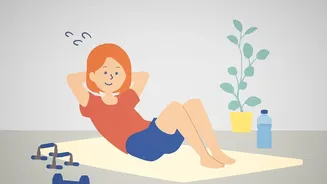








The Power of Starting Small
The thought of a one-hour workout can be daunting, making it easy to procrastinate. A five-minute routine, however, is psychologically easy to agree to. It's short enough that the 'I don't have time' excuse vanishes. The goal isn't to get exhausted; it's
simply to show up. This approach is rooted in behavioural psychology, which shows that small, repeatable actions are more likely to become automatic. By starting with an incredibly small step, you lower the mental barrier to entry. Each time you complete your five minutes, your brain gets a small dose of dopamine, reinforcing the action and telling your brain to 'do it again'. This creates a positive feedback loop that builds confidence and makes it more likely you'll stick with it tomorrow. Consistency is far more important than intensity when you're starting out.
Your First Five-Minute Routine
You don't need any equipment to get started. The key is to choose simple, full-body movements that get your heart rate up slightly and engage major muscle groups. Here is a balanced, no-equipment circuit you can do anywhere. Perform each exercise for 45 seconds, followed by 15 seconds of rest before moving to the next. 1. Jumping Jacks: A classic cardio move to warm up the body and elevate your heart rate.2. Bodyweight Squats: Focus on keeping your chest up and back straight as you lower your hips. This strengthens your legs and glutes.3. Push-ups (on knees or toes): A fantastic upper-body and core exercise. Go for a range of motion that is comfortable for you.4. Plank: Hold a steady plank to engage your entire core. Keep your body in a straight line from head to heels.5. High Knees: March or jog in place, bringing your knees up towards your chest to finish with a cardiovascular boost.
The Rules of Habit Consistency
Building a habit requires more than just a routine; it requires a system. To make your five-minute workout stick, anchor it to an existing part of your day. This technique, known as 'habit stacking', links the new behaviour to one that's already automatic, like brushing your teeth or making your morning coffee. For example, 'After my morning coffee, I will do my five-minute workout'. It's also crucial to be consistent with the time and place. This creates a powerful cue for your brain that it's time to move. Don't worry about variety at first; performing the same routine helps it become automatic faster. Most importantly, forgive yourself if you miss a day. The key is not to let one missed session derail you. Just get back to it the next day. Research shows that missing a single day doesn't prevent a habit from forming as long as you restart promptly.
Overcoming the Motivation Hurdle
Motivation is unreliable; it comes and goes. Lasting habits are built on discipline and systems, not fleeting feelings. One of the most effective strategies is to remove pressure. Tell yourself you only have to do five minutes. Often, the hardest part is just starting. Once you're moving, you may even feel like continuing. It's also helpful to reframe your perspective. Instead of viewing exercise as a chore, see it as an opportunity to invest in your well-being. Focus on the immediate benefits: reduced stress, a clearer mind, and a feeling of accomplishment. If you find yourself struggling, make it social. Share your goal with a friend for accountability, or find an online community for support.
When and How to Progress
After several weeks of consistent five-minute workouts, the routine will start to feel automatic. At this point, you can consider progressing. However, the goal is to build on your success without making it feel overwhelming again. You could add another five-minute 'snack' later in the day. Studies have shown that these short bursts of activity, sometimes called 'exercise snacks', can provide meaningful health benefits. Alternatively, you could extend your current session to seven or ten minutes. Another option is to increase the intensity of your existing five-minute routine by doing more repetitions or switching to more challenging variations of the exercises. The key is to listen to your body and make gradual changes. The foundation you've built is based on consistency, so any progression should feel sustainable and not like a chore that makes you want to quit.