

A Speck of Light, A Window to the Past
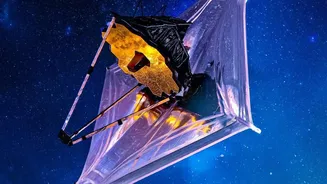
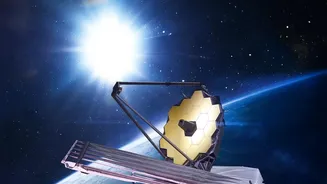
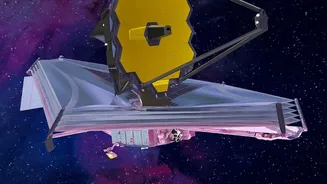
Imagine looking at a photograph that was taken not just years or centuries ago, but over 13.5 billion years in the past. This is precisely what the James Webb Space Telescope (JWST) is doing. Recent studies, like the JADES program, have focused on identifying
extremely distant objects that appear to us as tiny, faint, red specks. One such object, named JADES-GS-z14-0, has been confirmed as the most distant galaxy ever observed. We see it as it was just 290 million years after the Big Bang, when the universe was only 2% of its current age. This 'little red dot' is not just an astronomical curiosity; it is a time capsule, offering a direct glimpse into a period of cosmic history known as the Cosmic Dawn, when the very first stars and galaxies were being born.
Why Red Means Far and Old
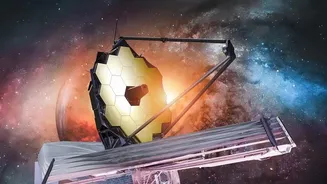
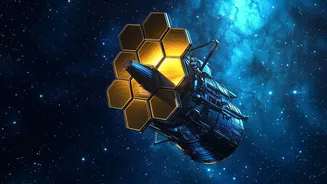
The reason these ancient galaxies appear red has to do with the very fabric of our universe. Since the Big Bang, the universe has been expanding. As light from a distant galaxy travels across billions of light-years to reach us, the space it is traveling through is stretching. This expansion of space stretches the wavelength of the light itself, shifting it towards the red end of the spectrum in a process called 'cosmological redshift'. The farther away an object is, the more its light is redshifted. The JWST was specifically designed with powerful infrared instruments to detect this extremely redshifted light, allowing it to see objects that are invisible to other telescopes and farther back in time than we have ever seen before.
Challenging Our Cosmic Theories
Finding galaxies like JADES-GS-z14-0 is causing scientists to rethink their models of the early universe. This particular galaxy is surprisingly bright and massive for its age, suggesting it is brimming with young stars. The detection of elements like oxygen, which are forged inside stars, at such an early stage challenges previous assumptions about how quickly the first generations of stars could form and enrich their surroundings. These discoveries suggest that galaxy formation may have been far more rapid and efficient than once believed. Every time Webb finds another one of these luminous, early galaxies, it provides crucial data that helps refine—and sometimes upend—our understanding of how cosmic structures grew from the primordial soup of the early universe.
The Ultimate Value of Looking Back
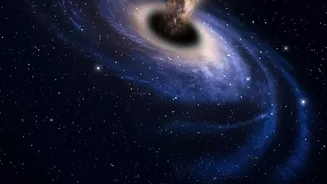
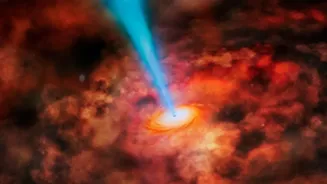
The headline-making discoveries of these 'little red dots' underscore the profound value of looking at extreme distances. In astronomy, distance equals time. By capturing light that has been traveling for nearly the entire age of the universe, we are not just measuring a location in space; we are observing a moment in history. This allows us to answer some of humanity's most fundamental questions: How did the first galaxies form? What were the first stars like? How did the universe become the complex, structured cosmos we see today? Some of these red dots are now thought to be the incredibly active cores of much larger galaxies, powered by supermassive black holes, whose fainter structures are simply too far away to see. This work is like cosmic archaeology, digging through layers of time to uncover our own origins.