


More Than Simple Math
Every home cook has faced this dilemma. The instinct is to treat a recipe like a simple math problem, multiplying every ingredient by two. But cooking is more chemistry and physics than arithmetic. When you increase the volume of food, you alter everything
from heat distribution to evaporation rates, which is why a blind doubling often fails. The secret successful cooks know is that scaling a recipe involves a holistic approach, considering not just the ingredients, but the environment in which they are cooked. This means thinking about your pots, pans, and even your oven differently.
The Pan Size Predicament
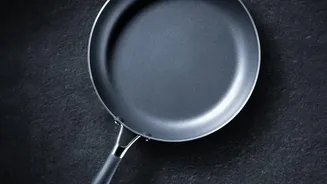
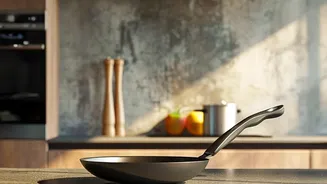
One of the most common mistakes is cramming double the ingredients into the same pan. A larger volume of food needs a larger surface area. If you double a sauce recipe in the same pot, the liquid's depth changes dramatically. This reduces the relative surface area for evaporation, meaning your sauce will take much longer to reduce and its flavours won't concentrate properly. Conversely, spreading too little food in a large pan can cause it to cook too quickly and burn. When doubling a recipe, you should aim to use a pan that is twice the volume or use two pans of the original size to maintain the food's depth and ensure even cooking.
The Science of Seasoning
Another major pitfall is seasoning. Doubling the salt, spices, and acids rarely works because their flavour impact is not linear. As the volume of a dish increases, the way flavours concentrate and interact changes. A good rule of thumb is to increase seasonings by a factor of 1.5 when you double the other ingredients. You can always add more salt or chilli powder at the end, but you can't take it out once it's in. Always taste and adjust as you go, especially near the end of the cooking process.
Baking: A Chemical balancing Act
Baking is where scaling becomes particularly tricky due to the precise chemical reactions involved. Leavening agents like baking soda and baking powder are the main culprits. Doubling them can produce too much gas, causing cakes to rise rapidly and then collapse, or leave a bitter, metallic taste. Many bakers suggest that when you double a recipe, you should increase the leavening agents by only about 80-90%. Similarly, for cakes and brownies, it's often better to make two separate batches according to the original recipe rather than one large one. This ensures the batter isn't overmixed and that the delicate chemical balance remains intact.
Adjusting Time and Temperature
More food in a pot or pan changes how it heats. A larger mass of food takes longer to heat through. For stovetop cooking, this might just mean a longer cooking time. But in the oven, a larger, denser casserole or cake might require a slightly lower temperature for a longer period to ensure the centre cooks without the edges burning. An instant-read thermometer becomes your best friend here, allowing you to check for doneness based on internal temperature rather than just time.