
The Magnetic Detective Work
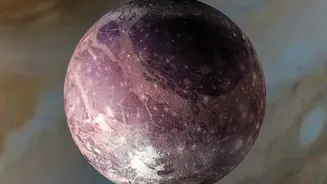
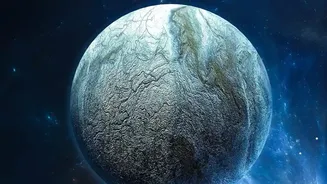
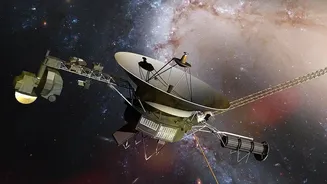
The first major clue came from NASA's Galileo spacecraft, which flew past Europa multiple times. It carried an instrument called a magnetometer, which measures magnetic fields. As Europa orbits Jupiter, it passes through the giant planet's immense magnetic field.
This changing field creates, or 'induces', a secondary magnetic field within Europa. For this to happen, Europa must have a layer of electrically conductive material inside it. The best candidate for such a material is a large body of saltwater. Ice is a poor conductor, but a salty ocean would react perfectly to Jupiter's magnetic influence, creating a distinct magnetic signature that Galileo detected. This told scientists that something large and conductive was sloshing around under the ice.
Peering Through the Ice with Radar
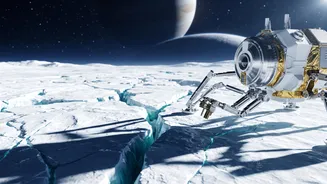
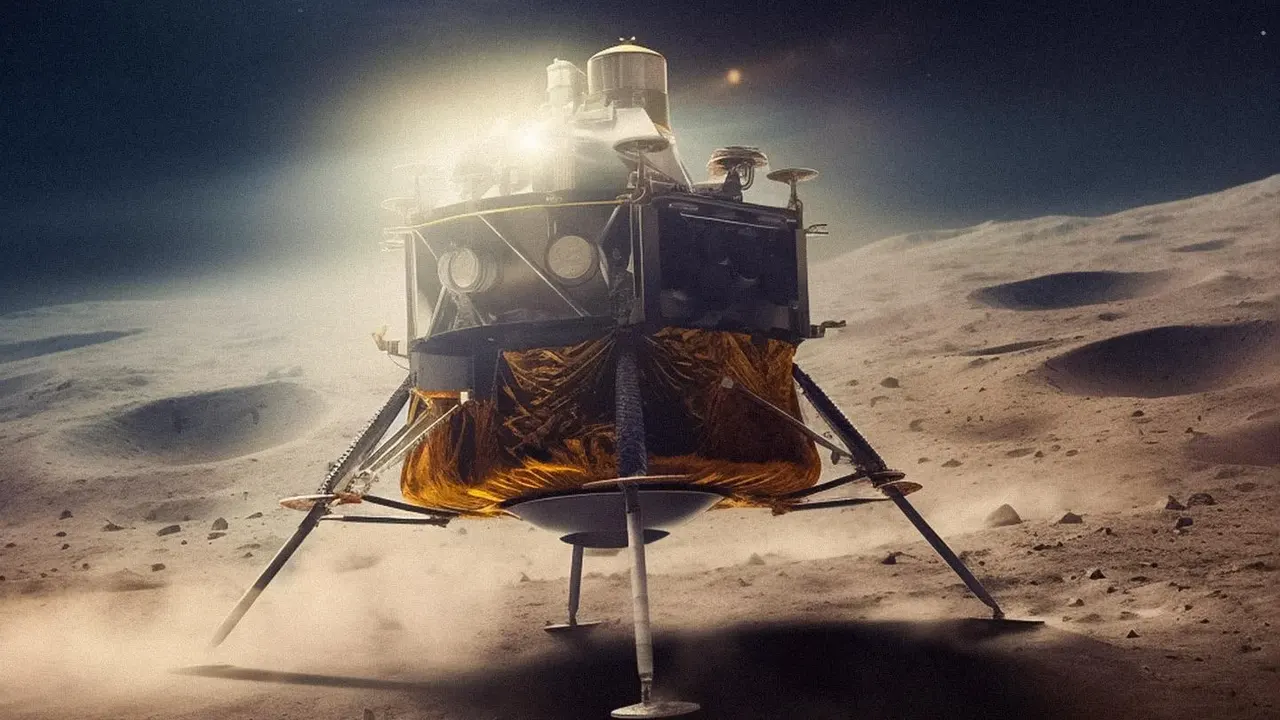
Confirming the ocean and measuring the thickness of the ice above it requires a different tool: ice-penetrating radar. NASA's Europa Clipper mission is equipped with an instrument called REASON (Radar for Europa Assessment and Sounding: Ocean to Near-surface). This works much like radar systems used on Earth to study glaciers in Antarctica. The instrument sends out radio waves at specific frequencies chosen to travel through ice but bounce off liquid water. By measuring the time it takes for these radio signals to travel down, reflect off the top of the ocean, and return to the spacecraft, scientists can calculate the thickness of the ice shell. This will create a 3D map of the ice, revealing its structure and directly searching for the ocean below.
Feeling the Pull with Gravity Science
Another ingenious method involves using gravity to feel what's inside. As a spacecraft like Europa Clipper flies by the moon, its path is subtly altered by Europa's gravitational pull. By sending a radio signal from Earth to the spacecraft and having it beam the signal back, scientists on the ground can measure tiny changes in the signal's frequency—a phenomenon known as the Doppler effect. These changes reveal how much the spacecraft is being tugged by Europa's gravity. Because Europa's orbit is not perfectly circular, Jupiter's gravitational pull flexes the entire moon. How much it flexes depends on its internal structure. A solid, rocky moon would barely deform, but a moon with a liquid ocean under a floating ice shell would bulge and stretch significantly. These tidal movements create tiny but measurable variations in the gravity field that the spacecraft can detect, helping scientists determine the ocean's depth.
Hunting for Water Geysers
Sometimes, the easiest way to find an ocean is to see if it's leaking. Both the Hubble Space Telescope and a re-analysis of old Galileo data have shown tantalizing evidence of what may be huge plumes of water vapour erupting from Europa's surface. The upcoming Europa Clipper mission is equipped with multiple instruments, including an ultraviolet spectrograph and a mass spectrometer, designed to fly through any potential plumes. By directly sampling the chemical makeup of these plumes, the spacecraft could analyse the composition of the ocean itself without ever having to drill through the ice. This would provide invaluable information about the ocean's salinity and whether it contains organic molecules, which are the building blocks of life.
Putting the Puzzle Pieces Together
No single instrument can give the full picture. The true power of this exploration comes from combining the data from all these different 'scanners'. The magnetometer suggests a salty ocean exists. The ice-penetrating radar will measure the ice shell's thickness and search for the ocean directly. Gravity science will reveal the ocean's depth and how it sloshes around. And spectrometers will analyse the chemistry of the surface and any plumes. Together, these instruments work in concert to build a comprehensive model of this hidden world. They will help scientists not only confirm the ocean's existence but also understand its properties, such as its depth and saltiness, and ultimately assess its potential to harbour life.