








The Soul of Omakase
First, a quick refresher. 'Omakase' translates to “I leave it up to you,” placing your entire dining experience in the hands of the chef. It’s a theatrical, intimate meal, traditionally built around the best seafood of the season. Each course, from a delicate
slice of raw fish to a perfectly grilled piece of eel, is a testament to precision, sourcing, and the chef’s mastery. For decades, the quality of the fish has been the undisputed measure of an omakase menu’s greatness. This is what makes the idea of a fully vegetarian omakase so radical and intriguing.
The Green Revolution at the Sushi Counter
So, why is this happening now? The shift is driven by a confluence of factors perfectly suited to urban India. Firstly, there's a growing demographic of discerning, well-travelled vegetarians and flexitarians who demand sophisticated dining options beyond the usual paneer tikka or mushroom risotto. They want access to global culinary experiences without compromising their dietary choices. Secondly, there’s the sustainability angle. As conversations around overfishing and the environmental impact of seafood grow louder globally, chefs are increasingly looking towards plant-based ingredients as both a responsible choice and a new creative frontier. This isn't just about catering to a niche; it's about redefining what luxury dining means in the 21st century.
The Art of the Vegetable
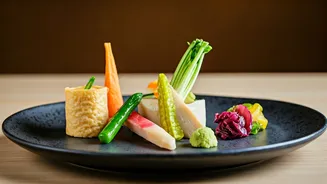
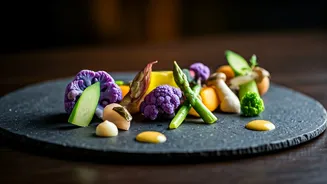
A vegetarian omakase is not a meal of subtraction; it’s one of intense culinary innovation. Chefs are applying traditional Japanese techniques—ageing, curing, smoking, and fermenting—to humble vegetables, transforming them into stars. Imagine a 'tuna' nigiri made from dehydrated and marinated watermelon, which uncannily mimics the texture and colour of the real thing. Or a sliver of 'scallop' crafted from king oyster mushroom, seared and brushed with a soy-butter glaze. Courses might feature avocado tempura with truffle salt, a delicate broth made from roasted corn husks, or silken tofu aged to develop a cheese-like complexity. It’s a showcase of how technique and imagination can unlock profound flavours from the plant kingdom.
Inspired by Tradition, Made for Today
While it feels revolutionary, the vegetable-centric approach has deep roots in Japanese cuisine. *Shojin Ryori*, the traditional vegetarian cooking of Japanese Buddhist monks, has for centuries focused on bringing out the natural essence of seasonal vegetables, tofu, and seaweeds. Modern chefs are drawing inspiration from this ancient philosophy, blending its mindful principles with contemporary fine-dining aesthetics. They are proving that an omakase experience is not defined by its ingredients alone, but by the philosophy of seasonality, balance, and the chef's heartfelt expression. The counter remains the stage, and the chef remains the star storyteller; only the characters in the story have changed.
Where to Find This Green Wave
This trend is quietly taking root in the high-end dining scenes of Mumbai, Delhi, and Bengaluru. Pioneering restaurants, both standalone and within luxury hotels, are launching dedicated vegetarian omakase menus. While some establishments were already known for strong vegetarian a la carte options, this new wave commits fully to a multi-course, chef-driven vegetable journey. It’s a bold move that challenges diners’ expectations but ultimately rewards them with a unique and memorable experience that is both globally inspired and deeply resonant with India's own rich vegetarian heritage.