




Why Cats Need to Climb
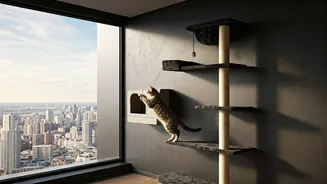
Before you start drilling, it’s helpful to understand why this project is more than just home decor. For cats, climbing isn’t a hobby; it's an instinct. In the wild, vertical spaces provide a vantage point to survey territory, spot prey, and evade predators.
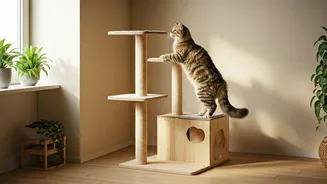
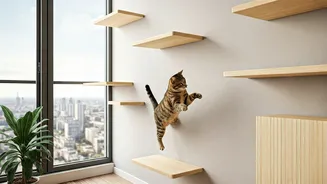
For our domestic companions, this instinct remains powerful. A 'cat superhighway' of shelves allows them to exercise these natural behaviours, reducing stress and anxiety. It gives them a sense of security, providing a safe retreat from a busy household (including other pets or small children). A cat that can climb is often a more confident and physically fit cat, less prone to the behavioural issues that stem from boredom and confinement.
Planning Your Feline Freeway
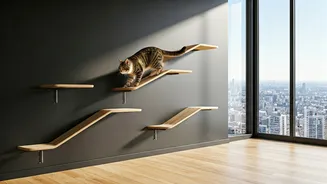
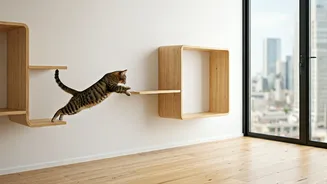
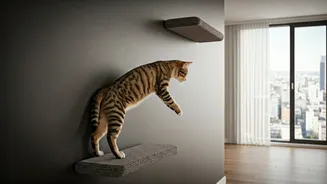
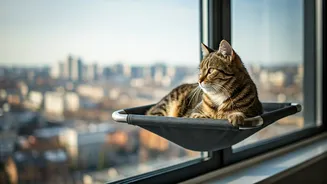
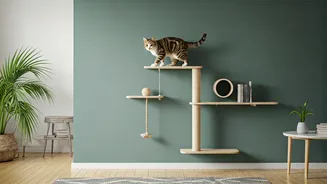
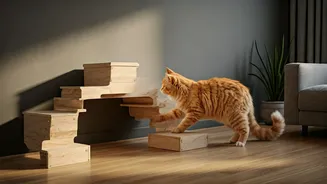
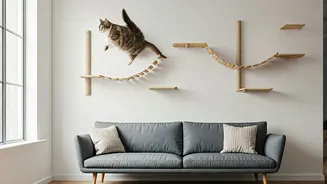
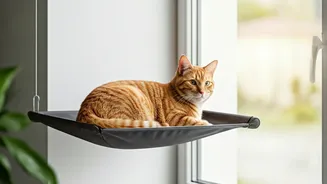
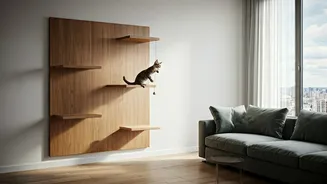
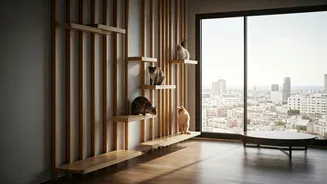
The best cat shelves feel like an integrated part of your home, not an afterthought. Start by observing your cat. Where do they like to nap? Is there a window with a view of birds that they’re desperate to reach? Plan your shelves to connect these points of interest. A great design often includes a mix of perches for lounging and 'steps' for agile movement. Sketch out a path on the wall. Make sure the shelves are spaced appropriately for your cat’s jumping ability—typically no more than a foot or two apart, both vertically and horizontally. Ensure the final destination is somewhere appealing, like a high-up perch in a sunbeam. Most importantly, avoid placing shelves above areas where you sit, like a sofa or bed, unless you’re confident in your installation skills.
Gathering Your Supplies
You don't need a professional workshop to get this done. The key is choosing sturdy, safe materials. For the shelves, solid wood like pine is an excellent, affordable choice. Avoid particleboard or MDF, which can sag and break under a cat’s weight over time. You’ll need strong metal brackets—the 'L' shape is a classic. The length of the bracket's arm should be at least two-thirds the depth of the shelf for proper support. For comfort and grip, consider a non-slip surface. A remnant of low-pile carpet, durable sisal rope, or a simple non-slip mat secured with non-toxic glue or staples works perfectly. Your basic toolkit should include a drill, a stud finder, a level, a measuring tape, screws long enough to anchor into the wall studs, and wall anchors for any spots where a stud isn't available (use these sparingly for lighter loads).
Installation and Safety Checks
Safety is the most critical part of this project. A poorly installed shelf is more dangerous than no shelf at all. The golden rule is to anchor into wall studs whenever possible. Use your stud finder to locate these vertical wooden beams inside your walls. Mark their locations lightly with a pencil. This is where your brackets will provide the most secure hold. Use a level to ensure your shelves are perfectly horizontal—a slanted surface is uncomfortable and unsafe for a napping cat. Drill pilot holes for your screws to prevent the wood from splitting. Once the brackets are firmly secured to the studs, attach the shelves to the brackets from underneath. Before you let your cat test it out, give each shelf a firm tug and press down with significant weight to test its stability. Sand down any sharp edges or corners to prevent scrapes.
Encouraging Your Cat to Explore
Don’t be discouraged if your cat doesn’t immediately take to their new aerial playground. Cats are cautious creatures. Introduce them to the shelves gradually. Place their favourite treats or a sprinkle of catnip on the lower shelves to entice them to explore. Use a feather wand or laser pointer to guide them up the path. Positive reinforcement is key. When they use the shelves, praise them. Make it a positive, low-pressure experience. Over time, they will begin to see the shelves as their own exclusive territory—a safe, elevated space from which they can confidently rule their domestic kingdom.