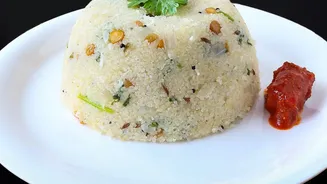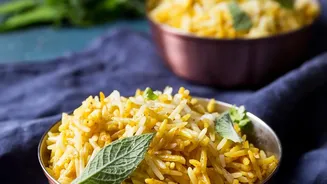


The quest for perfectly separate, fluffy grains of saffron rice ends here. A simple, traditional step—briefly toasting the rice in ghee—is the game-changer for achieving that coveted texture and deep, nutty aroma in every bite.
The Science of a Perfect Grain
The difference between sticky,
clumpy rice and a dish of distinct, fluffy grains comes down to starch. Rinsing rice before cooking removes excess surface starch, which is the first step towards preventing gumminess. However, the real transformation happens with heat and fat. The technique of toasting rice in a fat like ghee before adding any liquid is a cornerstone of the pilaf or pulao method, celebrated across India, Persia, and the Middle East. When you toast the uncooked grains, the fat coats each one. This coating creates a protective barrier that keeps the grains from sticking together. It also firms up the starches on the outside of each grain, which makes them absorb the cooking liquid more slowly and maintain their shape and integrity throughout the cooking process. The result is not only better texture but also a deeper, nuttier flavour as the heat gently cooks the grains.
Why Ghee is the Golden Ticket
While any fat can be used for toasting, ghee offers unique advantages, particularly for Indian dishes. Ghee, or clarified butter, has a high smoke point (around 250°C), which means you can toast the rice and bloom spices without the fat burning and creating bitter flavours. This is a distinct advantage over regular butter, which can scorch easily. Ghee also imparts a rich, nutty aroma and flavour that is central to many traditional recipes. This flavour profile perfectly complements the delicate fragrance of basmati rice and the luxurious notes of saffron. Furthermore, fat is an excellent vehicle for flavour. It helps to extract and carry the fat-soluble aromatic compounds from spices, distributing them evenly throughout the dish. In Ayurveda, pairing ghee with grains is also believed to make them more digestible and to moderate the glycaemic response.
The Art of the Toast: A How-To Guide
Mastering this technique is simple. Start by rinsing your long-grain basmati rice until the water runs clear, then drain it thoroughly. In a heavy-bottomed pot, melt a tablespoon or two of ghee over medium-low heat. If you're using whole spices or aromatics like onions, add them first to soften and release their fragrance. Then, add the drained rice to the pot. Stir gently but constantly, ensuring every grain is coated in the glistening ghee. You are not aiming to fry or brown the rice; the goal is to toast it gently. You'll know it's ready in a few minutes when the grains turn from translucent to a more opaque white and a warm, nutty aroma fills your kitchen. This process shouldn't take more than a few minutes. Once the rice is toasted, you are ready to add your hot cooking liquid and proceed with the recipe.
Weaving in the Saffron
For the most vibrant colour and aroma, saffron also needs special treatment. Simply tossing the precious threads into the pot is a waste. Saffron's colour and aroma compounds are water-soluble and need to be coaxed out through a process called 'blooming'. To do this, gently crush a generous pinch of saffron threads and steep them in a few tablespoons of warm water, milk, or broth for at least 15-20 minutes. You will see the liquid turn a stunning golden-orange. This infused liquid, along with the steeped threads, should be added to the pot along with the main cooking liquid after the rice has been toasted. Some recipes even call for blooming the saffron directly in warm ghee to capture its essence. This ensures the saffron's flavour and colour are distributed evenly, giving the entire dish that signature golden glow and intoxicating perfume.