
A New Culinary Confidence
For decades, the pinnacle of Indian dining often involved either replicating Western fine-dining norms or creating fusion dishes that sometimes diluted the soul of the cuisine. Think chicken tikka pizza or curry pasta. While accessible, these creations
often lacked depth. Today, a powerful shift is underway. Chefs are moving beyond mimicry and gimmicks like liquid nitrogen chaat, which defined the previous era of modern Indian food. Instead of seeking validation by comparing a 'thepla' to a 'savory flatbread', they are presenting Indian food with newfound confidence. This isn't just a trend; it's a movement rooted in a deep understanding of regional culinary wisdom, moving away from a single, monolithic idea of 'Indian food' and diving into the country's vast and varied micro-regionality.
The Treasure in Our Own Backyard
The new luxury in Indian fine dining isn't an imported truffle; it's a rare heirloom grain from a small farm in Chhattisgarh or a foraged herb from the Himalayas. This 'provenance as luxury' mindset is at the heart of the farm-to-table philosophy being championed by chefs across the country. Vanika Choudhary, founder of Mumbai's celebrated restaurants Sequel and Noon, is a leading voice in this movement. She works directly with farmers and communities, including women farmers in Ladakh, to source indigenous produce that rarely makes it to mainstream restaurants. Her menu at Noon, aptly named 'Forgotten, Foraged and Fermented', tells the story of seasonal shifts through ingredients like Ladakhi mint and tamyung, a swede-like root, challenging palates with a 10-course journey through India's unsung produce.
Technique Meets Tradition
This culinary renaissance is not about abandoning tradition but re-energizing it with global techniques. Chefs are now culinary curators, using modern methods to solve historical problems or enhance nostalgic flavors. Imagine a mutton curry, a dish of slow-braised love in a home kitchen. In a contemporary restaurant, that same mutton might be cooked sous-vide for 48 hours at a precise temperature, resulting in an impossibly tender texture while retaining its traditional flavour profile. This approach allows for structural reimagining: jackfruit is treated with the reverence of a steak, lotus root is turned into delicate chips, and millets are transformed from a humble grain into the star of fine-dining risottos. It's flavour engineering, not gimmickry, designed to deliver a cleaner, more refined expression of a beloved dish.
Dinner as a Story
Perhaps the most significant evolution is the concept of the meal itself becoming a narrative. The experience is no longer just about what's on the plate, but the story it tells. No one embodies this more than Chef Prateek Sadhu. After making waves with Masque in Mumbai, he moved to the Himalayas to open Naar, a 20-seat destination restaurant in a remote Himachal Pradesh village. Naar, meaning 'fire', features a wood-fired menu that Sadhu describes as "cooking the mountains". The restaurant, which recently debuted on Asia's 50 Best Restaurants list, takes diners on a journey through the Himalayan belt, from Jammu to the Northeast, with nearly all produce sourced from its own nearby farms. This is the birth of true destination dining in India—an experience people plan trips around, flying across the country to hear a story told through food.
The Experience Is Everything
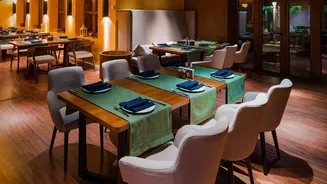
As the food evolves, so does the environment it's served in. The movement is also pushing back against the stiffness once associated with fine dining. Chef Manish Mehrotra of the globally acclaimed Indian Accent notes that the world is moving towards more 'comfortable dining'. With his new venture, Nisaba, he aims to create an environment that feels luxurious but not intimidating, like dining in a comfortable, elegant drawing room. The goal is to dismantle the idea that fine dining must be dictated by a rigid tasting menu chosen by someone else. This shift prioritizes the diner's comfort and experience, ensuring the setting is as thoughtfully curated as the food. It reflects a broader confidence—a belief that exceptional Indian cuisine doesn't need to hide behind intimidating rituals to prove its worth.