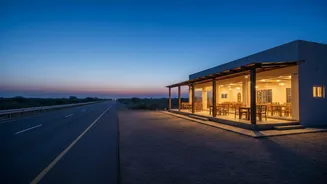







The Unified Theory of Dhaba Selection
The impulse on a long road trip is to stop at the first crowded dhaba you see. While popularity is a decent sign, it doesn't tell the whole story. A truly reliable roadside stop can be judged by three interconnected factors: the quality of its lighting,
the cleanliness of its washrooms, and the freshness of its food. Think of it as a single checklist. These elements are a proxy for the management's overall attention to detail, hygiene standards, and investment in customer safety and comfort. A failure in one area often signals a deeper problem, while excellence across all three is a reliable indicator of a well-run establishment where you can relax and refuel with confidence.
First, Judge by the Light
Before you even slow down, look at the lighting. Is the parking area and the entrance bright and well-lit? Good lighting is your first sign of a safe and professionally managed stop. Bright, clear lights suggest the owners have invested in the property and are not trying to hide anything. It provides security for your vehicle and your family, deterring theft and other unwelcome attention. More than that, a brightly lit establishment shows pride. It tells you the owners want their dhaba to be seen and that they care about creating a welcoming, safe environment for travellers, not just a quick, dingy stop for truckers. Dimly lit or shadowy places, on the other hand, can suggest a lack of care that often extends to other, more critical areas like the kitchen.
The Unfailing Washroom Test
This is a classic for a reason: the state of the washroom is often a direct reflection of the state of the kitchen. It is one of the few behind-the-scenes areas a customer can inspect. If the management ensures the toilets are clean, dry, supplied with soap, and in good working order, it’s a strong indication that they maintain similar hygiene standards where your food is being prepared. Conversely, if the washroom is neglected, it’s fair to assume the kitchen isn’t getting the attention it needs either. After all, if they are comfortable with customers seeing a filthy restroom, what might they tolerate in a kitchen that no customer ever sees? Don't be shy about doing a quick check before you commit to ordering a full meal.
Decoding the Menu and Turnover
The final piece of the puzzle is the food itself, specifically its freshness. This is where “food turnover” comes in. High turnover means the restaurant is busy and uses its ingredients quickly, ensuring what you’re served is fresh. A key sign is a focused, limited menu. Dhabas that excel at a few specific dishes, like dal, roti, and a couple of seasonal sabzis, are often a safer bet than places with sprawling menus offering everything from Punjabi to Chinese. A huge menu can mean many ingredients are sitting around for days, potentially frozen and refrozen. Look for places with high customer traffic and, if possible, a visible kitchen where you can see fresh ingredients being used. Piping hot food is another good sign, as freshly cooked meals are less likely to harbour harmful bacteria.
Connecting the Dots for a Safer Stop
The strength of this method lies in using these three points together. One out of three isn’t good enough. A brightly lit dhaba with a dirty toilet is a pass. A busy spot with a clean toilet but a suspiciously vast and greasy menu is also a risk. The gold standard is a place that scores high on all three criteria: it’s bright and welcoming from the road, the washrooms pass the cleanliness test, and the menu is focused and the food is served fresh and hot. These are the establishments that understand that hospitality is a complete package. They respect their customers’ safety, health, and comfort from the moment they pull off the highway to the moment they leave.