
The Cosmic Shadow Play
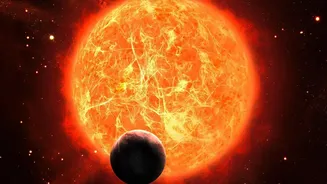
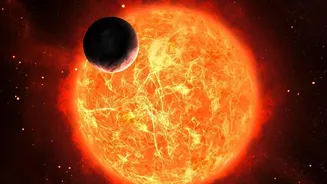
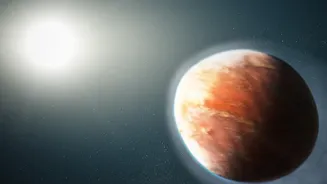
The first step in finding atmospheric moisture relies on a lucky alignment. Astronomers look for exoplanets using the 'transit method'. This involves watching a star for a tiny, periodic dip in its brightness. That dip is the tell-tale sign that a planet is passing
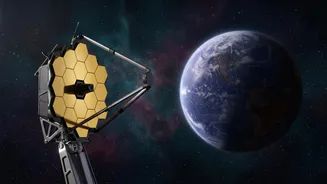
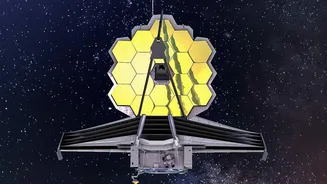
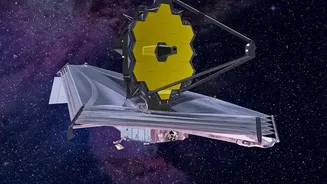
in front of its star from our point of view, creating a mini-eclipse. This transit is the golden opportunity scientists need. As the planet crosses its star, a tiny fraction of the starlight filters through the planet's atmosphere before it reaches Webb's mirrors. That sliver of light holds the chemical secrets of the planet's sky.
Decoding Starlight with Spectroscopy
The core technique for this analysis is called transmission spectroscopy. Think of it like this: the star produces a full spectrum of light, like a rainbow. When that light passes through the exoplanet's atmosphere, different chemical elements and molecules in the air absorb very specific colours, or wavelengths, of that light. Each molecule has a unique 'barcode' of light it absorbs. Water vapor, methane, and carbon dioxide all leave their own distinct signatures. The light that finally reaches the James Webb Space Telescope is therefore missing certain colours—and by identifying which ones are gone, astronomers can determine precisely what the atmosphere is made of.
Webb’s High-Tech Detective Tools
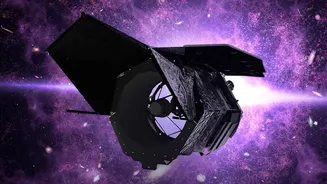
This is where Webb's incredible sensitivity comes into play. The telescope is equipped with a suite of advanced instruments called spectrographs, which are specialized tools that spread light out into its component wavelengths. Instruments like the Near-Infrared Imager and Slitless Spectrograph (NIRISS) and the Near-Infrared Spectrograph (NIRSpec) are perfectly tuned for this job. They are exceptionally sensitive to infrared light, a range of the spectrum that is invisible to the human eye but where molecules like water have very strong and clear absorption signals. These instruments can capture high-resolution data over a broad range of infrared wavelengths, allowing them to spot the chemical fingerprints that were undetectable with previous telescopes.
From Signature to Weather Map
Detecting the presence of water is just the beginning. The 'map' part of the headline comes from an advanced technique known as eclipse mapping. As a planet orbits its star, different parts of it are revealed to the telescope. By taking incredibly precise measurements of how the planet's light changes as it moves, scientists can start to piece together a picture of its atmosphere. For example, by focusing on the specific wavelengths absorbed by water, researchers can map out the temperature and concentration of water vapor at different altitudes and locations on the planet. This allows them to build a three-dimensional model of the exoplanet's atmosphere, revealing its structure and identifying which regions are wetter, drier, hotter, or colder.
Why This Search for Water Matters
The ability to detect and map water on distant worlds is a monumental step in the search for life beyond Earth. On our planet, water is a fundamental prerequisite for life as we know it. While finding water vapor on a gas giant like WASP-96 b doesn't mean we've found aliens, it proves that the building blocks of habitability can be identified across the galaxy. Each detection, from the first clear signs of water on a gas giant to hints of it in the rocky planet-forming zones of young stars, refines our understanding of how planetary systems form and evolve. It helps scientists narrow down which of the thousands of known exoplanets are the most promising candidates to search for more definitive signs of life in the future.