
The Global Threat of Coral Bleaching
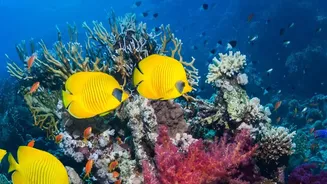
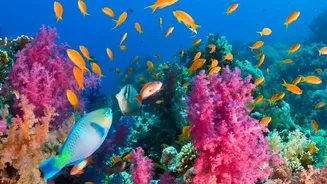
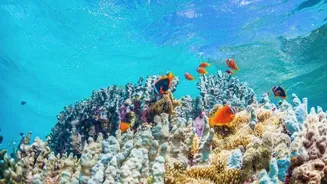
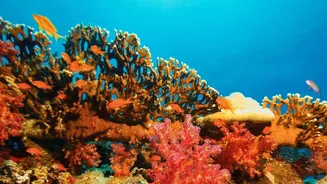
Coral reefs are hotspots of marine biodiversity, supporting an estimated 25% of all marine life, from tiny fish to larger predators. They also protect coastlines from erosion and provide livelihoods for millions of people. But these critical ecosystems
are facing an existential threat from climate change. As ocean temperatures rise, corals come under stress and expel the symbiotic algae living in their tissues, which provide them with food and their vibrant colour. This process, known as coral bleaching, leaves the coral skeleton stark white. A bleached coral is not dead, but it is starving and vulnerable. If high temperatures persist, the coral will die, leading to a loss of habitat for countless other species. The world has witnessed several mass bleaching events, with a particularly devastating period between 2014 and 2017 affecting over 70% of the world's reefs.
A Glimmer of Hope: The Super Corals
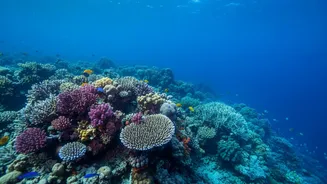
Amidst this bleak picture, scientists have discovered a glimmer of hope. In oceans around the world, from the Gulf of Aqaba to atolls in French Polynesia, certain corals are surviving and even thriving despite rising temperatures. These are often dubbed 'super corals'. These resilient organisms have a remarkable ability to withstand heat stress that would bleach and kill their neighbours. This resilience can stem from a few factors: some corals have simply adapted over time to live in naturally warmer waters, while others host a tougher, more heat-tolerant strain of algae. Some can even swap out their stressed algae for a more robust type. The discovery that this heat tolerance can be a stable, heritable trait has opened up a new frontier in coral conservation.
The Search for Heat-Resistant Heroes
Identifying these climate-ready corals is now a global priority for marine biologists. The process often begins by locating corals in naturally hotter environments, like shallow lagoons where temperatures fluctuate wildly. Scientists then collect small fragments and bring them into labs for 'stress tests'. In controlled aquarium tanks, researchers incrementally raise the water temperature and monitor which corals resist bleaching. By analysing the DNA of these hardy survivors, scientists can identify the genetic markers associated with heat tolerance. This crucial work helps create a map of resilience, showing where the strongest corals are and providing the genetic blueprint for their survival skills. Projects like the 'Super Reefs' program in Belize are actively using this data to inform national conservation strategies.
From the Lab to the Reef
Identifying these super corals is only the first step; the ultimate goal is to use them to actively restore degraded reefs. This emerging field, known as assisted evolution, focuses on giving nature a helping hand. One key method is selective breeding. By collecting spawn from naturally heat-tolerant parent corals and cross-breeding them, scientists aim to produce offspring with an even higher chance of survival in warmer oceans. These lab-raised or 'stress-hardened' corals are then grown in underwater nurseries before being 'outplanted' onto damaged reefs. The idea is that these resilient corals will not only survive future heatwaves but will also reproduce, passing on their hardy genes and helping to seed new, more robust coral populations across the reef.
A Crucial Defense for Global Hotspots
Focusing conservation efforts on these resilient corals provides a targeted, proactive defense for the planet's most important marine biodiversity hotspots. Instead of spreading resources thinly, this approach allows for strategic investment in reefs that have the best chance of long-term survival. For a country like India, with its precious reef ecosystems in the Andaman and Nicobar Islands, Lakshadweep, and the Gulf of Kutch, this science is particularly relevant. By identifying and nurturing its own native heat-tolerant corals, India can work to future-proof these vital natural barriers and economic resources. It’s a form of ecological triage—prioritising areas where intervention can make the most significant difference and building a network of resilient reefs that can act as sanctuaries in a warming world.