


Understanding the Gut Wellness Wave
In recent years, 'gut health' has become a major wellness topic, and for good reason. Our digestive system is home to trillions of microorganisms, collectively known as the gut microbiome. This internal ecosystem plays a crucial role in everything from
digestion and immunity to mood. A healthy, diverse microbiome is key to overall well-being, and one of the best ways to support it is by consuming probiotics.
Probiotics Explained Simply
Probiotics are live, beneficial bacteria that, when consumed in adequate amounts, offer health benefits. Think of them as friendly reinforcements for your gut. These 'good' bacteria help balance your microbiome, aid in the digestion of food, and can even produce essential vitamins. While yogurt is a famous source, traditional fermented foods, like certain Indian pickles, are also a powerhouse of these helpful microbes.
The Magic of Lacto-Fermentation
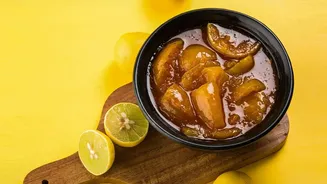
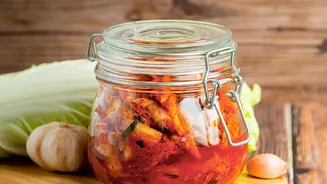
The secret to the probiotic power of traditional pickles lies in a process called lacto-fermentation. Unlike modern methods that use vinegar, this ancient technique uses only salt and water to create a brine. The vegetables are submerged in this brine, and the salt works to inhibit the growth of harmful bacteria while allowing beneficial bacteria, primarily from the Lactobacillus family, to thrive. These bacteria convert the natural sugars in the vegetables into lactic acid. This lactic acid not only acts as a natural preservative, giving the pickle its characteristic tangy flavour, but it also signifies a successful fermentation rich in live cultures.
Why Sunshine Is a Key Ingredient
The tradition of 'sun-curing' pickles is not just for nostalgia; it's a critical step in the fermentation process. Placing the jars in the sun provides the gentle, consistent warmth needed to encourage the rapid growth of beneficial lactic acid bacteria. This slow and steady natural process is what transforms simple ingredients into a living, probiotic-rich food. It stands in stark contrast to the high-heat pasteurisation used in many commercial pickles, a process that extends shelf life but kills off the very live cultures you want for gut health.
The 'Oil-Free' Advantage for Probiotics
While many Indian pickles are known for their generous use of oil, oil-free varieties are particularly special when it comes to fermentation. The primary fermentation process in these pickles happens in a salt-brine environment, uninhibited by oil. This allows the Lactobacillus bacteria to flourish optimally. In many oil-based pickles, the oil acts primarily as a preservative barrier against air, rather than fostering the fermentation that creates probiotics. Some oil-based pickles are fermented first and then have oil added, but for a pure, unadulterated fermentation, the oil-free method is highly effective.
Not All Pickles Are Probiotic
It's crucial to understand that not every pickle you find is a source of probiotics. Most commercially available pickles found on room-temperature shelves are made using vinegar and are pasteurised. The vinegar creates an acidic environment that preserves the vegetables but doesn't involve fermentation, meaning no live bacteria are produced. To get the gut-health benefits, you need to look for pickles that are specifically described as 'fermented' or 'probiotic' and are often found in the refrigerated section of stores.