





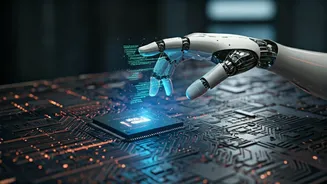


From Creative Tools to Creative Partners
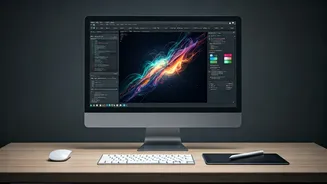
The design process has long been defined by its software—Adobe Creative Cloud, Figma, and others were the digital workshops where ideas took shape. This required deep technical skill in manipulating pixels, vectors, and layouts. Today, that paradigm is changing.
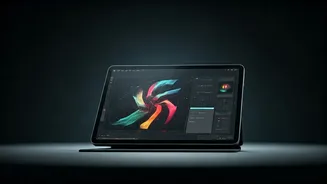
Generative AI tools like Midjourney, Adobe Firefly, and integrated features within Figma are acting less like tools and more like creative collaborators. Instead of manually creating every element, a designer can now describe a concept in natural language—a prompt—and the AI will generate visual starting points in seconds. This automates and accelerates repetitive tasks like creating variations or sourcing imagery, freeing up designers to focus on higher-level strategy and creative direction.
The New Workflow: A Conversation with AI
In the prompt era, the creative workflow is becoming a dialogue. It starts not with a blank canvas, but with a well-crafted instruction. For example, a designer might prompt an AI to generate mood boards for a new brand, specifying a target audience, desired emotions, and color palettes. From there, they can iterate by refining the prompt: “Make it more minimalist,” or “Generate three more options in a vintage style.” This process is used across the entire production cycle, from initial brainstorming and concept art to generating user interface layouts, creating illustrations, and even drafting website copy. The gap between a creative idea and a tangible asset has compressed dramatically, turning hours of manual work into minutes of prompted iteration.
Rise of the Prompt Engineer
This new era is giving rise to a new, essential skill: prompt engineering. It’s the art and science of crafting instructions that guide an AI to a desired outcome. A vague prompt yields a generic result, but a specific, contextual prompt can produce something remarkably close to the designer's vision. A strong prompt often includes elements like the AI’s role (e.g., “Act as a UI/UX designer”), the goal, visual specifics, constraints, and the intended audience. This skill is less about technical software ability and more about clear communication, creativity, and a deep understanding of design principles. As a result, new roles like “Prompt Master” or “AI Design Consultant” are beginning to emerge, positioning these professionals as the critical link between human intent and machine execution.
Challenges in the New Era
Despite the massive potential, the prompt era is not without its challenges. One of the largest concerns is the ethical dimension, including copyright and originality. Since many AI models are trained on vast datasets of existing images, there are risks of unintentional plagiarism. Furthermore, AI-generated content can sometimes feel generic or lack the emotional depth and unique storytelling that a human designer provides. There are also concerns about inherent biases within AI algorithms, which can perpetuate stereotypes if not carefully managed by the designer. The industry is still grappling with how to establish standards for transparency, ensuring clients and consumers know when a design is AI-assisted.