


Why Humid Air Changes Everything
Plants 'drink' through their roots, but they also 'breathe' and release water vapour through tiny pores in their leaves, a process called transpiration. Think of it as plant sweat. On dry days, plants transpire more quickly, pulling more water up from
the soil to stay hydrated. However, when the air is already saturated with moisture, as it is during India's humid monsoons, this process slows down dramatically. With less water evaporating from their leaves, plants simply don't need to draw as much from the soil. The pot's soil also dries out much more slowly because of reduced evaporation into the humid air.
The Dangers of Overwatering
The most common mistake plant parents make during humid weather is sticking to a rigid watering schedule. This leads to overwatering, the number one killer of houseplants. When soil stays waterlogged, it cuts off oxygen supply to the roots. This oxygen deprivation suffocates the roots, causing them to stop functioning, turn mushy, and decay. This condition, known as root rot, prevents the plant from absorbing nutrients and water, ironically leading to symptoms that can mimic underwatering, like wilting leaves. A plant with root rot may droop even when the soil is wet, a tell-tale sign of distress.
Ditch the Schedule, Trust the Soil
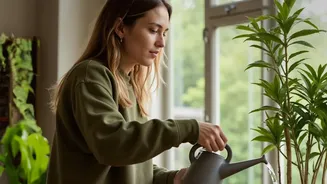
The golden rule for watering plants, especially in humid conditions, is to check the soil first. Forget watering every Sunday out of habit. Instead, make it a habit to assess your plant's actual needs. Different plants, pot sizes, and locations in your home will all affect how quickly soil dries. A plant in a porous terracotta pot will dry out faster than one in a plastic pot. A plant near a bright window will be thirstier than one in a shadier corner. The only reliable way to know if it's time to water is to check.
How to Check if a Plant Is Thirsty
There are several simple, effective methods to check soil moisture. The most accessible is the finger test: gently insert your finger into the soil up to your second knuckle. If the soil feels dry at that depth, it's time to water. If it feels moist, hold off for a few more days. Another method is using a simple wooden skewer or chopstick. Push it deep into the pot and pull it out. If it comes out clean and dry, the soil is dry. If it comes out with moist soil clinging to it, there is still plenty of moisture at the root level. For those who prefer a tech solution, a soil moisture meter can provide a quick reading from deep within the pot, taking the guesswork out of watering.
Look for the Warning Signs
Plants give clues when they are unhappy. It's crucial to distinguish between the signs of overwatering and underwatering, as they can sometimes look similar. Overwatered plants often have yellowing leaves (especially lower ones), limp or soft foliage, and the soil may have a musty smell or grow mould. Paradoxically, both old and new leaves might drop. Underwatered plants, by contrast, will typically have crispy brown tips, wilting leaves that feel dry (not soft), and the soil will be visibly pulling away from the sides of the pot. By paying attention to these signs and combining them with a soil check, you can diagnose the problem accurately.