






What Exactly Is Changing?
The Food Safety and Standards Authority of India (FSSAI) has published draft regulations proposing new Maximum Residue Limits (MRLs) for two specific pesticides used in tea cultivation: Acetamiprid and Imidacloprid. The proposed limit for Acetamiprid is 20
parts per million (ppm), and for Imidacloprid, it is 50 ppm. An MRL is the highest legally permitted level of a pesticide residue in a food product. These are not the amounts necessarily present, but a legal benchmark for safety and trade. The regulations, published in the official gazette on October 16, 2026, are currently in a draft stage, open for public and stakeholder feedback before being finalised.
Why New Rules and Why Now?
This move is part of a broader effort by the FSSAI to strengthen food safety regulations based on scientific data, international best practices, and India's domestic agricultural needs. For years, there has been a push from consumer advocates and international markets for stricter monitoring of pesticide residues in tea. The absence of clearly notified MRLs for some widely used and approved pesticides has created uncertainty for growers, who face the risk of crop losses to pests or having their products rejected in certain markets. By setting clear benchmarks, the FSSAI aims to provide clarity for growers, processors, and testing labs, ultimately enhancing consumer protection.
Aligning with Global Standards
A key driver for these new proposals is aligning Indian standards with those in major international markets. The Ministry of Health and Family Welfare has noted that the proposed limit for Acetamiprid (20 ppm) is stricter than the corresponding limits in Japan (30 ppm) and the United States (50 ppm). The proposed limit for Imidacloprid has been formulated with reference to international Codex standards, which serve as a global benchmark for food safety. This harmonisation is critical for India's tea export industry, which has faced challenges with consignments being rejected due to differing pesticide regulations in other countries. Aligning standards helps ensure Indian tea remains competitive and accepted globally.
The View from the Tea Gardens
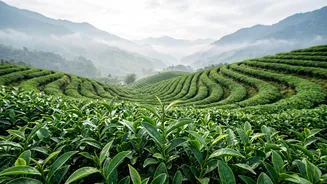
Tea plants are vulnerable to a wide array of pests that thrive in the warm, humid conditions of plantations. This makes plant protection a constant battle for growers. While industry bodies like the Tea Board of India have been working to promote Integrated Pest Management (IPM) and reduce reliance on chemicals, certain approved pesticides remain crucial for protecting yields. Before the new MRLs were proposed, a 'regulatory gap' existed where approved pesticides lacked official residue limits from FSSAI, causing major issues. In July 2026, for example, manufacturers in Assam expressed concerns about being penalised for residues of Acetamiprid and Imidacloprid because final MRLs had not been notified. The new draft rules are a direct response to these long-standing requests from the industry for clarity.
So, What Does This Mean for Tea Drinkers?
For the average person enjoying their daily chai, these proposed regulations are a positive step towards ensuring safety and quality. By establishing clear and scientifically-backed limits for pesticide residues, regulators are creating a more robust system for monitoring the tea that reaches your kitchen. It's important to remember that MRLs are set with a significant safety margin. However, some experts note that because tea is consumed multiple times a day, it is important to assess how much of these chemicals actually passes from the leaves into the brewed drink. Ultimately, the goal of these clearer standards is to build greater trust in the safety of one of India's most beloved beverages, both at home and abroad.