






A Cosmic Detective Story
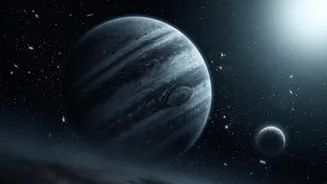
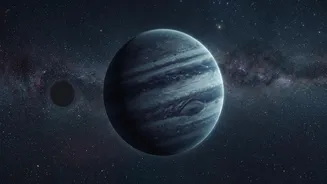
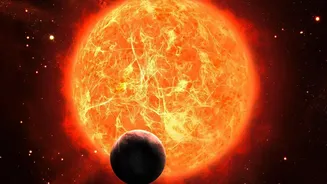
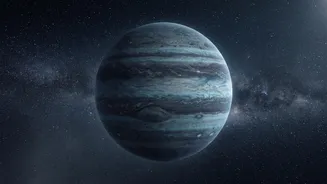
For seven years, from 2019 to early 2026, scientists using NASA's Transiting Exoplanet Survey Satellite (TESS) had a reliable, if slightly quirky, subject. TOI-2535 b, located about 1,000 light-years from Earth, is a 'hot Jupiter'—a massive gas giant
that orbits perilously close to its star. TESS finds planets by watching for tiny, periodic dips in a star's brightness, which occur when a planet crosses, or 'transits', in front of it from our point of view. For years, TOI-2535 b performed this cosmic transit. But it was acting strangely. Its appearances became erratic, sometimes arriving up to six hours early or late. Then, the transits grew fainter and shorter. By March 2026, they stopped completely. The planet was, for all intents and purposes, missing.
The Clue in the Wobble
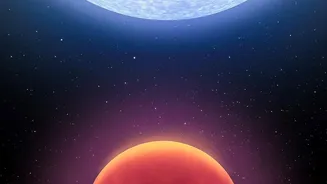
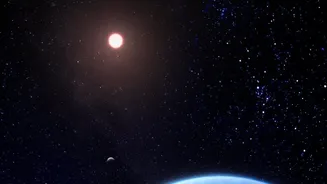
Planets don't just blink out of existence. The researchers, led by a team at UCLA, knew there had to be a rational explanation. The irregular timing of the transits was the biggest clue. A planet orbiting on its own should be as regular as a train schedule. The fact that TOI-2535 b was arriving early and late strongly suggested something else was pulling on it. The culprit, astronomers now believe, is a second, unseen planet in the same system. This hidden neighbour is locked in a gravitational dance with TOI-2535 b, causing the orbits of both planets to wobble like a spinning top that's about to fall over. This effect, known as orbital precession, slowly tilted TOI-2535 b's path. From our perspective on Earth, its orbit shifted until it no longer crossed the face of its star. It didn't vanish—it just moved out of our line of sight.
The Significance of an Eight-Day Year
TOI-2535 b's incredibly short orbit—completing a full 'year' in just over eight Earth days—is what makes it a hot Jupiter. By comparison, Mercury, our own solar system's innermost planet, takes 88 days. This extreme proximity to a star presents a puzzle. Planets this large are thought to form much farther out in a solar system, where it is cooler and there is more material to gather. So how did it get so close? There are two main theories: a violent migration, where a planet is flung inward after a chaotic gravitational encounter, or a gentler, slower migration through the gas and dust disk of the early solar system. The presence of a nearby planetary companion in the TOI-2535 system strongly suggests the latter. It's likely these two worlds migrated inward together, a formation history that this 'disappearing act' has helped to reveal.
What Happens Now?
The disappearance of TOI-2535 b is more of an observational loss that has turned into a scientific gain. It provides the most extreme example ever seen of two planets interacting so strongly that their orbits are rapidly changing. This dynamic gravitational relationship helps refine our models of how planetary systems form and evolve over time, revealing that they can be much messier and less predictable than the relatively stable, flat plane of our own solar system. Scientists predict that TOI-2535 b's orbit won't wobble back into our line of sight for another 30 to 50 years. In a fascinating twist, however, the unseen companion planet that caused all this drama might just have its orbit tilted into view much sooner, offering astronomers a chance to finally meet the hidden sibling in this remarkable cosmic family.