





The Monsoon's Economic Lifeline
The southwest monsoon is the lifeblood of India's agriculture, a sector that relies heavily on its annual rains. Around 55-60% of the country's net sown area is rain-fed, making millions of farmers and the vast majority of crop production directly dependent
on the timing and distribution of these rains. The four-month season is critical for the Kharif or summer crop, which includes essentials like rice, pulses, and oilseeds. Beyond just watering the fields, a healthy monsoon replenishes reservoirs, which are crucial for irrigation during the subsequent Rabi (winter) season, and recharges groundwater levels. Its performance dictates rural incomes, which in turn drives demand for everything from tractors to fast-moving consumer goods, making it a powerful engine for the entire economy.
An Anxious 2026 Forecast
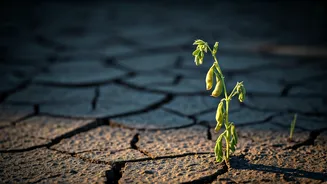
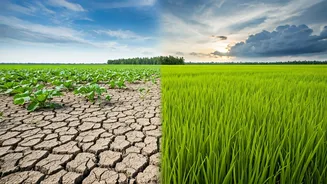
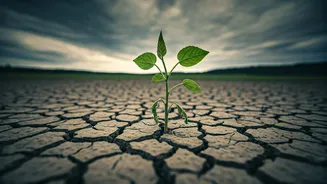
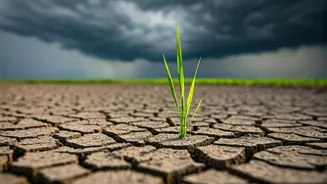
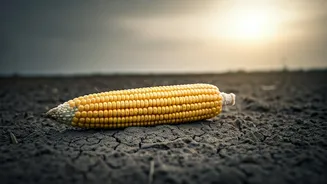
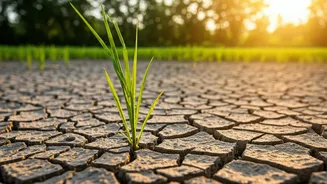
The outlook for the 2026 monsoon is fraught with uncertainty. The India Meteorological Department (IMD) has projected a “below-normal” monsoon, with seasonal rainfall expected to be around 90% of the Long Period Average (LPA). This forecast is amplified by the emergence of El Niño conditions, a climatic phenomenon in the Pacific Ocean historically linked to weaker monsoons and drought in India. The concern is already visible on the ground. As of late June, cumulative rainfall was significantly below normal, with deficits of over 40% reported. This has led to a slow start for Kharif sowing, with the area planted for key crops like paddy, cotton, and pulses lagging behind last year's figures.
The Vulnerable Kitchen Staples
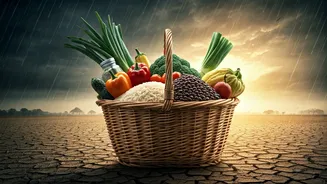
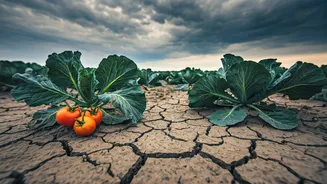
When rainfall is erratic, certain food items are the first to feel the pressure. Vegetables, especially tomatoes, along with pulses and oilseeds, are highly vulnerable. These crops are often grown in rain-fed areas, and delayed sowing or insufficient moisture can severely impact their yields. Recent heatwaves prior to the monsoon have already strained vegetable supplies, with tomato prices seeing a significant spike. While the government maintains comfortable buffer stocks of staples like rice and wheat, it has no such buffer for most pulses and vegetables. This makes their prices highly sensitive to immediate supply disruptions, a risk that is currently playing out with sharp volatility in local mandis for leafy greens.
Government on High Alert
Both the central government and the Reserve Bank of India (RBI) are closely monitoring the situation. The RBI has explicitly flagged a weak monsoon as a primary risk for food inflation, warning that retail inflation could approach its upper tolerance limit of 6% later in the year if price pressures mount. In response, the government has begun rolling out contingency plans. Agriculture Minister Shivraj Singh Chouhan has identified over 300 districts as vulnerable to deficient rainfall. States have been advised to encourage farmers to plant short-duration, drought-resistant crop varieties and to promote crop diversification to hedge against potential losses. Measures like imposing stock limits on certain commodities are also being used to prevent hoarding and speculation.
What to Expect in the Coming Months
The critical period will be July and August, which typically account for the bulk of monsoon rainfall. A strong revival of the monsoon during these months could help recover lost ground in sowing and stabilize the production outlook. However, if the deficit persists, consumers can expect continued upward pressure on the prices of vegetables, pulses, and edible oils. While the outlook for staples like wheat and rice is stable for now due to adequate government reserves, the fragility lies in the everyday items that constitute a significant portion of the household food basket. The focus for now is less on the seasonal average and more on the week-to-week distribution of rainfall, which will ultimately determine crop health, farm incomes, and the price you pay at the local market.