


Find Your Unifying Thread
Before you hang a single frame, the secret to a beautifully mixed gallery wall is deciding on a cohesive element that ties everything together. This isn't about rigid rules, but about creating a sense of intentionality. Your unifying thread could be a consistent
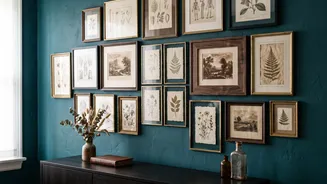
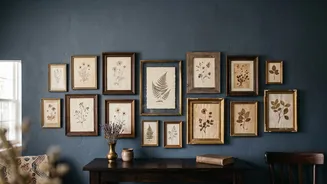
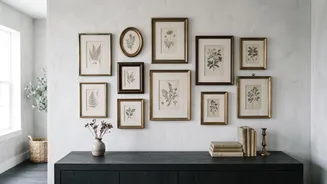
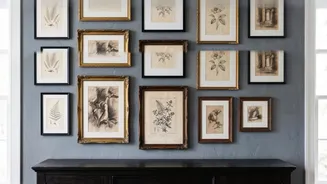
color palette, a shared style of artwork, or even the finish of the frames. For example, you might decide to mix various frame styles—from baroque to modern—but keep them all within a black, white, and gold color scheme. Alternatively, you could showcase a collection of black-and-white photographs in a wild assortment of wood, metal, and painted frames. This anchor prevents the wall from feeling chaotic and instead makes it look curated, as if each piece was thoughtfully collected over time.
Master the Mix of Styles
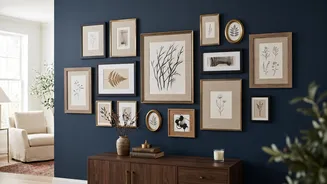
The magic of this look is in the contrast between ornate and simple. A dramatic, carved gold frame can be the star of the show, but it needs simpler, more minimalist frames to balance it out. Think of it as a conversation; not every piece needs to shout. A good guideline is to use ornate frames as powerful accents rather than the majority. You can achieve harmony by pairing a highly detailed vintage frame with several thin, contemporary metal or wood frames. The visual weight is what matters most. A small, intricate frame can have as much presence as a larger, simpler one. This interplay ensures each piece gets its moment to shine without overwhelming the entire wall.
Plan Your Layout on the Floor First
One of the most crucial steps is to plan your arrangement before making any permanent holes in the wall. Lay all your frames on the floor and start playing with the composition. This allows you to see how the different shapes, sizes, and styles interact. A common strategy is to start with your largest or most significant piece—your anchor—and build outwards from there. Place it slightly off-center to create a more dynamic, less rigid feel. Then, arrange the other frames around it, paying attention to balance. A large, heavy frame on one side can be balanced by two or three smaller frames on the other. Don't forget to mix horizontal and vertical orientations to add rhythm and movement. Tracing each frame onto paper and taping the cutouts to the wall is another great way to visualize the final look.
The Hunt for Perfect Frames
Building a collection of vintage and simple frames is part of the fun. Flea markets, thrift stores, and antique shops are treasure troves for unique, ornate frames with history. When hunting, look for interesting shapes and details, and don't worry too much about the color or the existing artwork—both can be changed. You can easily spray paint mismatched frames to fit into your chosen color palette. For simpler, modern frames, retailers offer a wide variety of affordable wood and metal options that serve as the perfect supporting cast for your more decorative finds. Online marketplaces like Etsy and eBay also have curated sets of vintage frames if you want to get a head start on your collection.
Fill Your Frames with Meaning
What goes inside the frames is just as important as the frames themselves. A truly personal gallery wall tells your story. Mix different types of art to create layers of interest: family photos, abstract prints, vintage botanical illustrations, children's drawings, or even a small mirror or woven textile. If your frames are very different, using art with a similar theme or color story can be another unifying element. For instance, a collection of landscape prints will feel connected even in a motley crew of frames. Remember the design advice to 'frame for the piece, not for the space'. The frame should always complement the art it holds first and foremost.