



The Unseen Heat Source in Your Home
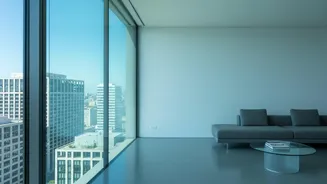
In the concrete jungles of modern India, large glass windows are a staple of apartment and office design. They offer expansive views and a feeling of openness, but they also act like giant magnifying glasses for the sun. A significant portion of the heat
that builds up inside a home enters directly through its windows. According to the Department of Energy, this solar heat gain can account for nearly 30% of a home's cooling load. This means your air conditioner has to work much harder, and run for longer, just to counteract the heat streaming through the glass. This leads not only to uncomfortable 'hot spots' near windows but also to persistently high electricity bills and increased strain on HVAC systems.
What Are Smart Window Coatings?
Imagine a transparent shield on your windows that intelligently filters sunlight, blocking the heat while letting the light pass through. That's the core idea behind smart heat-blocking coatings. These are advanced, often microscopic-thin layers or liquid coatings applied directly onto existing glass. Unlike dark, old-fashioned sun films that dramatically reduce visibility, modern coatings use nano-technology to selectively target the invisible parts of the solar spectrum—specifically, infrared (IR) and ultraviolet (UV) rays, which are responsible for heat and fading damage, respectively. The result is a window that looks virtually unchanged but performs far better, keeping the interior bright and cool.
How Do They Block Heat?
These coatings work through several advanced mechanisms. The most common type for residential use are spectrally selective films. They are engineered with ceramic particles or multiple layers of nano-metals that reflect or absorb heat-carrying infrared radiation while remaining highly transparent to visible light. Some advanced versions, known as 'smart windows', are dynamic. Thermochromic coatings react to temperature, automatically tinting to block more heat as the sun gets stronger. Electrochromic glass goes a step further, allowing you to control the tint with a switch or an app, much like a dimmer for your windows. Another promising technology is Passive Daytime Radiative Cooling (PDRC). These materials not only reflect sunlight but also radiate absorbed heat away from the building into deep space, allowing surfaces to cool down without using any energy.
The Real-World Benefits for Indian Homes
The impact of these coatings can be significant. Studies and user reports show that high-performance films can block up to 85% of infrared heat and 99% of harmful UV rays. This translates into a noticeable difference in indoor comfort, with some products claiming to lower indoor temperatures by as much as 8-15 degrees Celsius in peak summer conditions. By reducing the amount of heat entering your home, these coatings can slash air conditioning costs by up to 30%, a substantial saving for any urban household. Beyond savings, they protect your furniture, curtains, and artwork from fading caused by UV radiation and reduce the uncomfortable glare on screens.
What to Consider Before You Invest
Several Indian companies now offer advanced heat-blocking solutions, from liquid nano-coatings to high-performance films, with some leveraging Japanese technology. When choosing a product, look beyond the initial price and consider its performance metrics. Key factors include Visible Light Transmission (VLT), which tells you how much light will still come through, and the Infrared Rejection (IRR) percentage. Professional installation is often recommended for liquid coatings and high-end films to ensure a flawless, bubble-free finish and long-term durability, with many products offering a lifespan of a decade or more. Costs can vary, with Indian suppliers listing prices from approximately ₹50 to ₹250 per square foot, depending on the technology and brand.