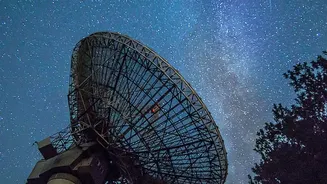








The demand for artificial intelligence is pushing data centers to their limits, consuming vast amounts of energy and land. Some in the tech industry see a solution in space, but this futuristic vision is casting a shadow over a much older pursuit: astronomy.
What is Orbital AI Computing?
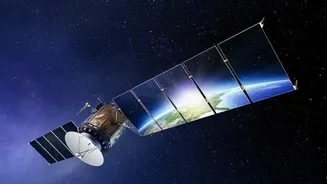
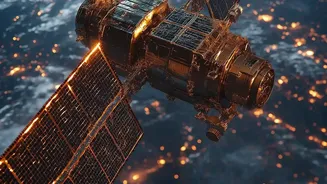
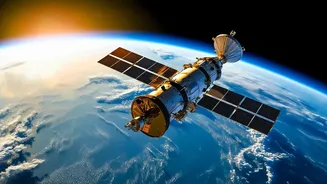
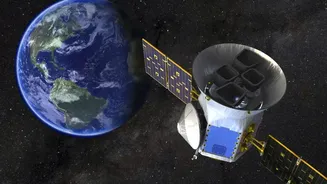
Orbital AI computing is the concept of placing large-scale data centers into low-Earth orbit to power artificial intelligence applications. Instead of building massive, energy-hungry facilities on the ground, companies are exploring the idea of launching satellites equipped with powerful processors. These orbital platforms would process vast amounts of data in space, a practice known as edge computing. The idea is driven by a few key advantages: constant solar power without day/night cycles or weather interruptions, and the near-perfect vacuum of space offering a solution for cooling the powerful hardware through large radiator panels. Companies like SpaceX and startups such as Starcloud have already filed applications for constellations numbering in the tens or even hundreds of thousands of satellites.
The Business Case for AI in Space
The primary driver for moving AI infrastructure off-planet is the technology's enormous and growing appetite for energy and water. Terrestrial data centers face increasing regulatory hurdles and community resistance due to their massive environmental footprint. By moving to orbit, companies could tap into a continuous source of solar energy, generating significantly more power than an equivalent panel on the ground. This approach also bypasses the need for the millions of litres of water used daily for cooling Earth-based centers. Furthermore, processing data directly in orbit reduces the need to send massive raw data files back to Earth, cutting down on bandwidth costs and delivering insights faster for applications like disaster monitoring, agricultural health, and national security.
A Sky Full of Streaks
While orbital data centers may solve problems on Earth, they create new ones for astronomers. The issue lies in their size and reflectivity. To power and cool these 'in-space supercomputers', satellites would need massive solar arrays and radiator panels. One proposed design stretches 70 meters from tip to tip, wider than a Boeing 74-8 jumbo jet. For astronomers, these satellites act like giant mirrors reflecting sunlight. This creates bright streaks across long-exposure images, the kind needed to capture faint, distant galaxies and other celestial objects. The problem is already well-documented with existing communication constellations like Starlink, which have been shown to contaminate a significant percentage of astronomical images.
Why The New Satellites Are a Bigger Problem
Proposed AI data center satellites are a much greater threat than current communication satellites for several reasons. First, their sheer size would make them far more reflective. Some estimates suggest they could be hundreds of thousands of times more reflective than a Starlink satellite, potentially becoming as bright as the planet Venus in the twilight sky. Second, their numbers are staggering. Proposals for up to one million such satellites have been filed, a number that would dwarf the roughly 15,000 active satellites currently in orbit. This density could create a permanent, shifting web of bright objects that would be impossible to avoid. Besides leaving streaks, the collective light from so many objects could raise the overall brightness of the night sky, making it harder to detect faint objects at all. Finally, the heat radiated by these satellites could interfere with infrared astronomy.
Seeking a Collaborative Solution
The astronomical community is sounding the alarm, warning that these constellations could severely hamper research at crucial facilities like the Vera C. Rubin Observatory, which is designed to survey the entire sky. The American Astronomical Society has raised concerns about the impact on optical, infrared, and radio astronomy. In recent years, astronomers have collaborated with companies like SpaceX to mitigate the impact of communication satellites by using anti-reflective coatings and adjusting satellite orientations. However, experts warn that the scale of proposed orbital data centers may render these existing mitigation strategies insufficient. Software can help remove some streaks from images, but this postprocessing is not a perfect solution and can result in data loss, especially when bright trails saturate a camera's sensors. As the 'New Space Economy' grows, the challenge will be to balance technological innovation with the preservation of our ability to observe the cosmos.