


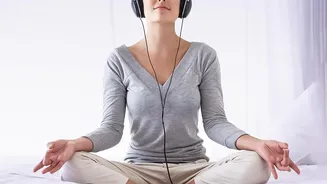

Yoga Nidra invites us into a state of profound rest, a conscious sleep that restores the body and mind. But the journey inward is deeply influenced by our world without. The right environment isn't a luxury; it's a key to unlocking its full power.
Understanding Yoga Nidra
Often
called 'yogic sleep', Yoga Nidra is a guided meditation practice that brings you to a state of consciousness between waking and sleeping. Unlike other forms of meditation that may require you to focus or empty your mind, Yoga Nidra systematically guides your awareness through your body, breath, and inner world. Lying down comfortably, you simply follow the instructor's voice. The goal is not to fall asleep, but to remain aware as your body enters a state of deep physiological rest. This practice is renowned for its ability to reduce stress, improve sleep quality, and calm the nervous system, offering the benefits of hours of sleep in a short session.
Why Your Space Matters
The effectiveness of Yoga Nidra hinges on a yogic principle called Pratyahara, or the withdrawal of the senses. The practice systematically guides you to turn your attention away from external stimuli—sights, sounds, and physical sensations—and direct it inward. A quiet, undisturbed space is fundamental to this process. Sudden noises, bright lights, or interruptions can easily pull your awareness back to the outside world, disrupting the delicate state of deep relaxation. Every external sound is a piece of data your brain has to process, preventing it from fully disengaging and resting. Creating a sanctuary minimises these external pulls, allowing your nervous system to switch from its 'fight or flight' mode to 'rest and digest'.
Crafting Your Personal Haven
Creating the ideal practice space doesn't require a dedicated room, but it does demand intention. Start by choosing a spot where you're least likely to be disturbed. This could be a corner of your bedroom or a quiet area in your living room. The first step is to minimise auditory distractions. Close the door, put your phone on silent and out of reach, and inform family members or flatmates that you need uninterrupted time. Visual quiet is just as important. Dim the lights or use an eye pillow to block out light completely. This simple act signals to your brain that it's time to rest and turn inward, significantly deepening your experience.
Engaging Senses for Deeper Calm
While quiet is the foundation, you can enhance your space by thoughtfully engaging other senses to promote relaxation. Comfort is paramount. Ensure you are warm enough, as body temperature can drop during deep rest; have a soft blanket ready. Use props like a bolster under your knees to support your lower back and a small pillow for your head. The goal is to make your body so comfortable that it disappears from your awareness. Some people also find gentle, calming scents, like lavender from a diffuser, helpful in setting a tranquil mood. The key is to create an environment that feels safe, secure, and nurturing, freeing your mind to follow the guided journey.
When Silence Is Not an Option
Living in a bustling city or a busy household can make finding true silence seem impossible. Fortunately, you can still create a bubble of tranquility. High-quality noise-canceling headphones are an excellent investment, allowing you to immerse yourself in the guide's voice without external interruptions. Alternatively, you can use headphones to play a gentle, consistent background sound like white noise, rain, or ambient music, which can mask sudden, jarring noises. You might also find a specific time of day, such as early in the morning or late at night, that is naturally quieter. The aim isn't necessarily absolute silence, but a consistent and predictable soundscape that your brain can tune out.