

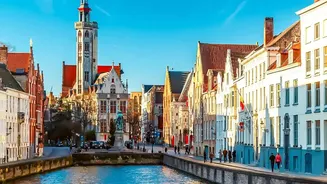

Bologna, Italy: The Learned and the Fat
Known affectionately as 'La Dotta, La Grassa, La Rossa' (the learned, the fat, the red), Bologna is a feast for the mind and the stomach. Home to the world's oldest university, its streets are lined with terracotta-roofed buildings and miles of iconic
porticoes. After climbing the 498 steps of the Asinelli Tower for a breathtaking view of the red city, your reward awaits in a steaming plate of the local specialty. Forget what you know as 'spaghetti bolognese'. In Bologna, the authentic dish is tagliatelle al ragù. This consists of fresh, silken egg pasta ribbons coated in a slow-cooked meat sauce, profoundly richer and more complex than its international counterpart. The ragù, often made with a mix of beef and pork, is a time-honoured tradition, and enjoying a plate in a classic trattoria is a quintessential Bolognese experience.
Porto, Portugal: Bridges and Bold Flavours
While Lisbon gets much of the attention, Portugal's second city, Porto, offers a grittier, soulful charm. Its historic Ribeira district, a UNESCO World Heritage site, is a colourful tumble of houses leading down to the Douro River. The most iconic landmark is the Dom Luís I Bridge, a double-decker metal arch marvel designed by a student of Gustave Eiffel. After a walk across its upper deck for stunning city views, it's time to tackle Porto's signature dish: the Francesinha. Not for the faint of heart, this is a monstrous and beloved sandwich. It features layers of bread, steak, ham, and sausage, all covered in melted cheese and then drenched in a hot, thick tomato and beer sauce. Often served with fries and a fried egg, it's a full-on culinary event that perfectly captures the city's hearty and unpretentious spirit.
Ghent, Belgium: A Fairytale Castle and Creamy Comfort
Often overlooked in favour of nearby Bruges and Brussels, Ghent is a vibrant city that perfectly blends medieval history with a lively, modern energy. Canals wind through the city, flanked by the beautiful guildhalls of the Graslei and Korenlei. But the city's most formidable landmark is the Gravensteen, the 'Castle of the Counts', a formidable 12th-century stone fortress complete with a moat right in the city centre. After exploring its turrets and imagining medieval life, warm up with a bowl of Gentse Waterzooi. This traditional stew was originally made with fish from the local rivers, but a chicken version is now just as popular. It’s a creamy, comforting dish made with a broth enriched with egg yolks and cream, and filled with tender chicken and julienned vegetables like leeks, carrots, and celery. It’s the perfect, soul-warming antidote to a chilly day of sightseeing.
Ljubljana, Slovenia: Dragons and Dumplings
Slovenia's capital is a green, charming, and exceptionally walkable city that feels more like a friendly town. The Ljubljanica River, crossed by numerous bridges including the famous Dragon Bridge, flows through its heart. Overlooking it all from a forested hill is Ljubljana Castle, a medieval fortress offering panoramic views. Slovenian cuisine is a fascinating mix of Mediterranean, Alpine, and Eastern European influences. A must-try dish is Idrijski Žlikrofi. These are small dumplings, often compared to ravioli, that hold a protected geographical status. Originating from the mining town of Idrija, they are traditionally filled with a simple but delicious mixture of potatoes, onions, and herbs. They can be served as a side dish, perhaps with a meat stew like 'bakalca', or as a main course on their own, often tossed in buttered breadcrumbs.