

Why Venus? Earth's Runaway Twin
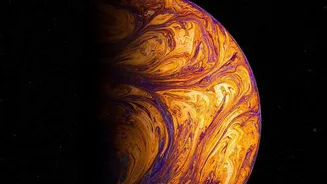
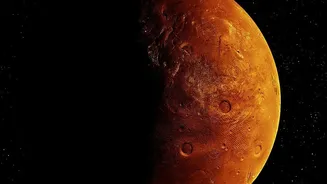
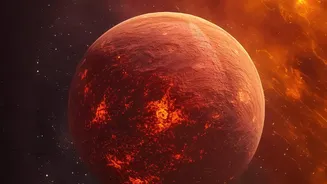
Venus is both strikingly similar to and terrifyingly different from Earth. It’s nearly the same size and mass, but its surface is hot enough to melt lead, and the atmospheric pressure is over 90 times that of our own planet. This is the result of a runaway
greenhouse effect, where a thick carbon dioxide atmosphere traps solar heat. For scientists, Venus serves as a crucial natural laboratory. Understanding why our planetary twin took such a catastrophic evolutionary path offers vital insights into planetary climate dynamics and the long-term risks our own world might face. The mission aims to move beyond past explorations by providing a more comprehensive look at the planet's surface, subsurface, and complex atmosphere all at once.
A Toolkit for an Alien Atmosphere
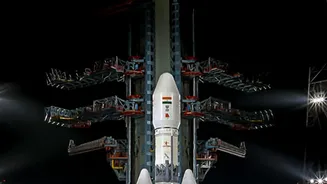
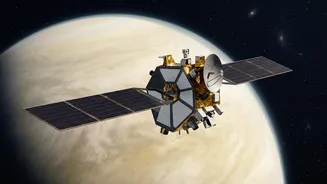
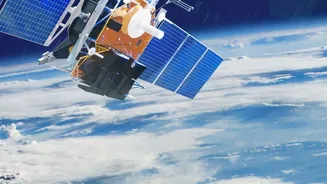
The Shukrayaan orbiter, scheduled for a March 2028 launch, is designed to be a flying laboratory. While it carries instruments to map the surface, such as a high-resolution Synthetic Aperture Radar (SAR), a major part of its focus is the in-depth chemical analysis of the atmosphere. To do this, ISRO has assembled a suite of nearly 20 scientific payloads, developed both in India and through international collaborations with agencies from Sweden, Russia, and Germany. This array of sensors will provide a multi-faceted view of the Venusian clouds, which are composed mainly of sulfuric acid droplets.
Sniffing and Seeing the Clouds
Several key instruments are dedicated to atmospheric investigation. A Mass Spectrometer will essentially 'sniff' the air, identifying the different atoms and molecules present. This is crucial for understanding the precise chemical mix that makes up the toxic environment. Other instruments, including a thermal camera and various spectrometers, will analyze the clouds at different wavelengths of light, from infrared to ultraviolet. This helps scientists map the composition and temperature of the clouds, observe the powerful winds that whip through the upper atmosphere, and detect phenomena like lightning. A key Russian-French collaboration, the VIRAL instrument, is designed to analyse atmospheric gases in the infrared spectrum. Another, the Venusian Neutrals Analyzer (VNA) from Sweden, will study how the solar wind strips away particles from the atmosphere, helping to explain how Venus lost its water.
Hunting for Venus's Biggest Secrets
The mission’s sensors are tasked not just with confirming what we know, but with solving enduring mysteries. One puzzle is the identity of an 'unknown UV absorber,' a mysterious substance in the clouds that absorbs ultraviolet radiation from the sun. Shukrayaan’s instruments are poised to gather data that could finally identify this compound. Another tantalizing goal is to investigate the highly debated 2020 detection of phosphine gas in the Venusian clouds. On Earth, phosphine is associated with biological processes, so confirming its presence—or absence—is a high-priority objective for instruments like VIRAL. While not a definitive proof of life, such a discovery would fundamentally change our understanding of habitability beyond Earth.
A Landmark Mission for India
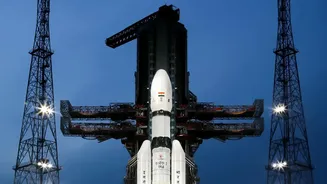
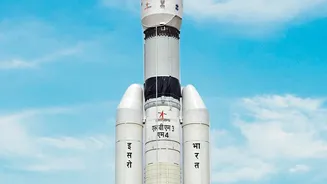
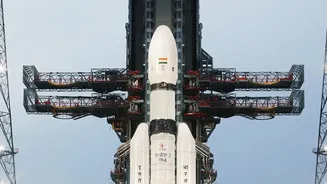
The Shukrayaan mission represents a significant leap for India's interplanetary ambitions, following the successes of Chandrayaan to the Moon and Mangalyaan to Mars. By tackling the immense challenges of Venus exploration, ISRO is cementing its position as a major player in global space science. The mission, approved with a budget of approximately ₹1,236 crore, will not only contribute invaluable data to the global scientific community but also drive technological innovation within India. The comprehensive approach of studying the surface, atmosphere, and solar wind interaction in a single mission is unprecedented for Venus exploration, promising to deliver a holistic picture of this enigmatic world.