


Why Your Hips Get So Stiff
Our bodies are designed for movement, but many of us spend the majority of our day in a seated position. When you sit for long periods, the muscles at the front of your hips, known as the hip flexors, remain in a shortened, compressed position. Over time,
this can lead to tightness and stiffness. Meanwhile, the muscles in your glutes can become less active, creating an imbalance that affects how you stand and walk. This lack of movement also reduces circulation and lubrication within the hip joint itself, making everything feel tight and restricted when you finally stand up. That feeling of being 'locked up' is your body's signal that it needs to move more.
The Big Benefits of Happy Hips
Improving your hip mobility isn't just about feeling less stiff. Your hips are the central link between your upper and lower body, and when they move well, your whole body benefits. Better hip mobility can lead to improved posture and balance, reducing the strain on your lower back and knees, which often have to compensate for tight hips. It can prevent injuries by allowing for more efficient movement patterns, whether you're an athlete or just going about your day. Making daily activities like bending down, walking up stairs, or playing with your kids easier and more comfortable is a primary reward of a consistent mobility practice.
1. 90/90 Stretch
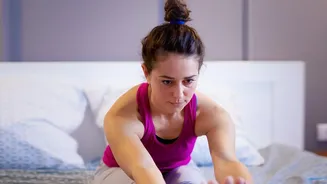
This is a fantastic exercise for targeting hip rotation. Sit on the floor. Bend your right leg in front of you so your knee and lower leg are on the ground, creating a 90-degree angle. Position your left leg beside you, also bent at a 90-degree angle with the inner shin and ankle on the ground. Your front shin should be roughly parallel to your back thigh. Try to sit up tall with a straight back. To deepen the stretch, gently lean your chest forward over your front shin, only going as far as you feel a comfortable stretch in your hip. Hold for 30 to 60 seconds, breathing deeply, before carefully switching to the other side.
2. Seated Butterfly Stretch
A classic and gentle stretch for the inner thighs and groin. Sit on the floor with your spine straight. Bring the soles of your feet together and let your knees fall out to the sides. The closer you pull your heels toward your body, the more intense the stretch will be. You can gently press your knees toward the floor with your hands, but avoid bouncing. For a gentler version, simply let gravity do the work. Hold the position for 30 seconds to a minute, focusing on relaxed, even breathing. This simple movement helps open the hips and relieve tension built up from sitting.
3. Frog Stretch
This is a deep inner thigh and groin opener that should be approached gently. Start on your hands and knees. Slowly widen your knees out to the sides, as far as is comfortable, keeping the inside of your feet on the floor with your ankles in line with your knees. You can lower down to your forearms to increase the stretch. You should feel a significant stretch in your inner thighs and hips. Breathe deeply and hold for 30-60 seconds. This pose can be intense, so it's important to listen to your body and not push into pain. Using a yoga mat or blanket under your knees can make it more comfortable.
4. Lying Figure-Four Stretch
This stretch targets the outer hip and glute muscles. Lie on your back with your knees bent and feet flat on the floor. Cross your right ankle over your left thigh, just below the knee, keeping your right foot flexed. This is the figure-four shape. If this is enough of a stretch, stay here. To deepen it, reach your hands around your left thigh and gently pull it toward your chest until you feel a stretch in your right glute and hip. Keep your head and shoulders on the floor. Hold for 30 seconds, then switch legs.
5. Cat-Cow Stretch
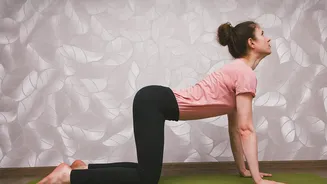
While often seen as a back stretch, Cat-Cow is excellent for creating gentle movement through the hips and pelvis. Start on your hands and knees with your wrists under your shoulders and your knees under your hips. As you inhale, drop your belly towards the floor and look up, tilting your pelvis to create the 'Cow' pose. As you exhale, round your spine toward the ceiling, tucking your chin to your chest and tucking your pelvis for the 'Cat' pose. Continue flowing between these two positions for 10-15 repetitions, connecting your breath to the movement.