




A Mission to a Mysterious Water World
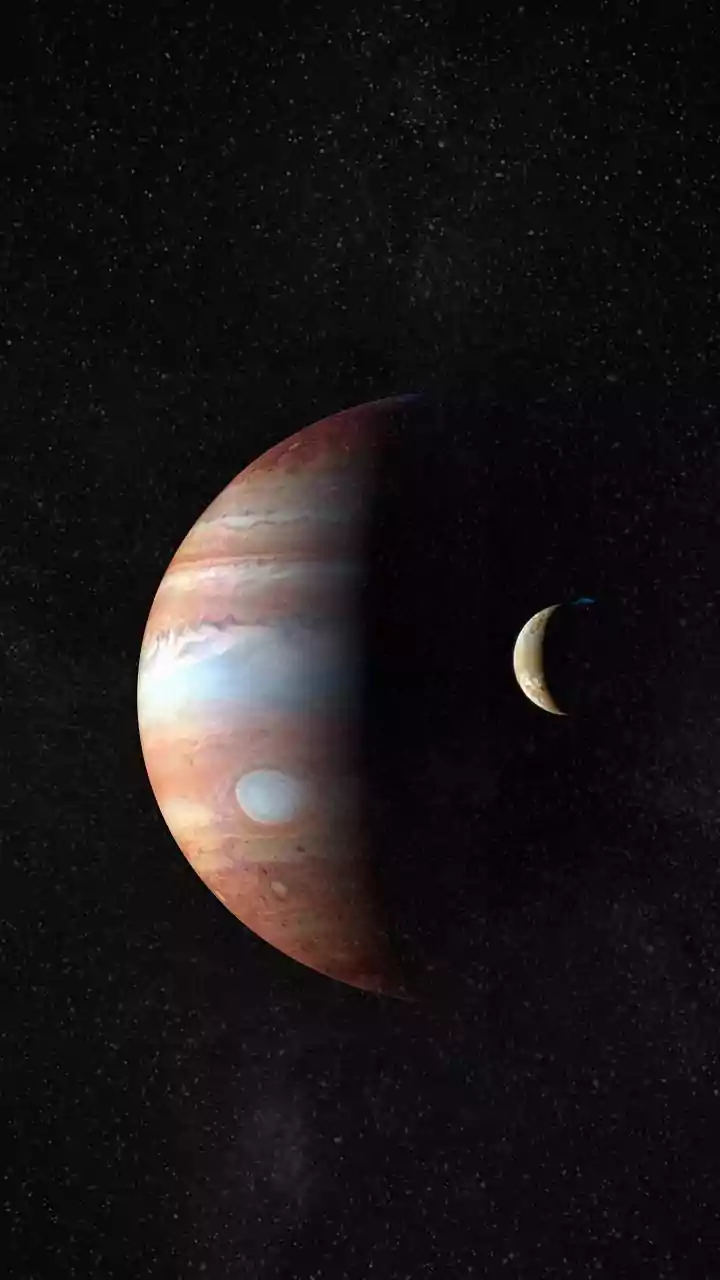
Launched in October 2024, NASA's Europa Clipper is the largest and most ambitious spacecraft ever sent on a planetary mission. Its destination is Jupiter, but its primary target is the enigmatic moon Europa. Scientists have compelling evidence, gathered
by previous missions like Galileo, that a global ocean of liquid saltwater is sloshing beneath Europa's icy shell—an ocean that could contain more than twice the water of all of Earth's oceans combined. The Europa Clipper's main goal is not to find life directly, but to answer a more fundamental question: does Europa have the conditions to support it? The mission will investigate the three key ingredients for life as we know it: liquid water, essential chemical elements, and an energy source. To achieve this, the spacecraft will perform dozens of close flybys of the moon, some as low as 25 kilometers from the surface, to gather detailed measurements.
The Toolkit for Exploring an Alien Ocean
So, how do you study an ocean hidden under miles of ice? You use a sophisticated suite of nine scientific instruments designed to see, sense, and sniff out clues. The headliner is an ice-penetrating radar instrument called REASON (Radar for Europa Assessment and Sounding: Ocean to Near-surface). By sending out radio waves at two different frequencies, REASON can probe up to 30 kilometers into the ice, searching for the ocean's signature and mapping the ice shell's thickness. It can also spot any pockets of water or briny slush trapped within the shell, which could be signs of interaction between the surface and the ocean below. Other key sensors include spectrometers that analyze the chemical composition of Europa's surface and its tenuous atmosphere by studying the light they reflect and emit. These instruments, MASPEX and SUDA, will also be on the lookout for plumes of water vapor that may erupt from the surface, giving them a chance to directly sample material from the moon's interior.
Searching for Clues, Not Creatures
It is important to understand that Europa Clipper is a reconnaissance mission, not a life-detection mission. Its instruments are not designed to find living organisms. Instead, they are looking for 'biosignatures'—subtle clues in the chemistry and geology that could indicate the presence of biological processes. For example, the mission's mass spectrometers can analyze the composition of ice grains and gases to see if they contain complex organic molecules or unusual ratios of certain elements, which can be indicators of life. The spacecraft’s magnetometers will measure the characteristics of the ocean, such as its depth and salinity, by studying how Jupiter’s powerful magnetic field interacts with it. A thermal imager will also scan the surface for warm spots, which could point to recent eruptions of warmer water. By layering data from all these instruments, scientists will build the most detailed picture of Europa ever assembled, identifying areas that might be habitable.
The Long Voyage and What Comes Next
The journey to Jupiter is a long one. After its launch, Europa Clipper began a 2.9-billion-kilometer trek that will take over five years. To get the speed it needs, the spacecraft performed a gravity-assist flyby of Mars in March 2025 and is scheduled for another around Earth in December 2026. It is expected to arrive at the Jupiter system in April 2030. Once there, it won't orbit Europa directly due to the intense radiation from Jupiter. Instead, it will enter a long, looping orbit around the gas giant and conduct nearly 50 flybys of Europa over about four years. This strategy allows the spacecraft to get incredibly detailed observations while minimizing its exposure to the harsh radiation environment. The findings from Europa Clipper will be revolutionary, guiding future exploration and potentially selecting landing sites for a follow-up mission that could one day drill into the ice.