




The Cold, Dry Truth
The most significant reason for winter's superior stargazing is a simple matter of physics: cold air cannot hold as much moisture as warm air. During humid summer nights, tiny water droplets suspended in the atmosphere create haze. This haze scatters
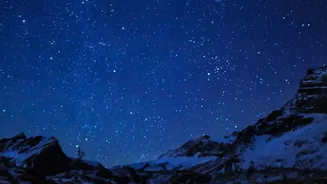
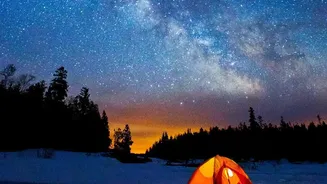
light from both celestial objects and ground sources, like city lights, reducing the overall transparency of the sky. The result is a washed-out view where fainter stars and the Milky Way can disappear entirely. In winter, the cold, dry air contains far less water vapour. This lack of humidity means there's less atmospheric haze to obscure your view, allowing starlight to travel more directly to your eyes. This results in what astronomers call good 'transparency', making the sky appear darker and the stars sharper and more vibrant.
A More Stable Atmosphere
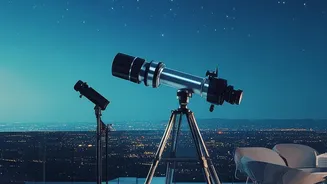
Beyond just being dry, the winter atmosphere is also often more stable. Astronomers use the term 'seeing' to describe the stability of the atmosphere. Air turbulence, caused by mixing layers of air at different temperatures, makes stars appear to twinkle wildly. While charming, this twinkling is actually distortion that blurs the view of planets and stars through a telescope. Cold air is denser than warm air, and it tends to settle in more stable, uniform layers, especially on calm nights. This stability reduces atmospheric turbulence, leading to better 'seeing'. The stars twinkle less, and you get a much sharper, more focused image of celestial objects, which is a huge advantage for observing fine details on the Moon or planets.
The Jet Stream's Helpful Push
The position of the polar jet stream also plays a crucial role. The jet stream is a fast-moving river of air high in the atmosphere that separates cold polar air from warmer air to the south. During winter in the Northern Hemisphere, this boundary is more pronounced, and the jet stream strengthens, often dipping further south. When the jet stream flow comes from the northwest, it tends to usher in cool, dry air from the Arctic. This weather pattern effectively pushes out more turbulent, moisture-laden air masses, leaving behind the crisp, clear conditions that dark-sky seekers cherish. Checking the position of the jet stream can often be a good predictor of a great night for astronomy.
Winter's Celestial Centrepieces
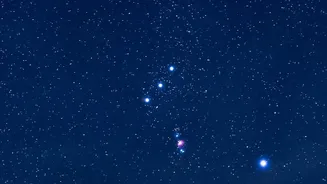
The clarity of the air is perfectly timed with the arrival of some of the night sky’s most spectacular sights. For observers in India and across the Northern Hemisphere, the winter months bring the constellation Orion the Hunter to prominence. Its distinct belt of three stars is one of the easiest patterns to spot. Following the belt leads you to other celestial celebrities, like Sirius, the brightest star in the night sky, and the orange giant Aldebaran in the constellation Taurus. The winter sky also features the beautiful Pleiades star cluster, known in India as Krittika. Furthermore, winter nights are the longest of the year, providing an extended window for observation, from early evening until dawn.
Tips for Your Winter Watch
To make the most of these pristine conditions, a little preparation goes a long way. The most obvious but crucial tip is to dress warmly in layers. The cold that brings the clear skies can quickly cut an observing session short if you're not prepared. Head to a location as far away from city lights as possible to minimize light pollution. Even a short drive out of town can make a huge difference. Once you're set up, allow your eyes at least 15-20 minutes to fully adapt to the darkness; this will dramatically increase the number of stars you can see. Finally, be patient. The sky is constantly in motion, and taking the time to simply look up and watch is part of the magic.