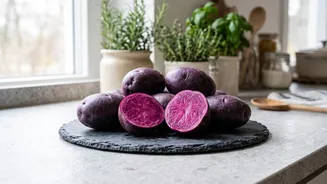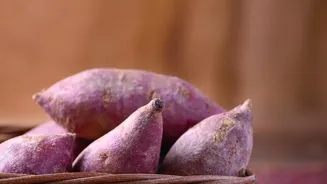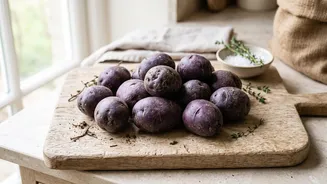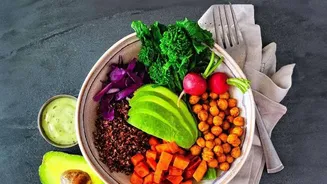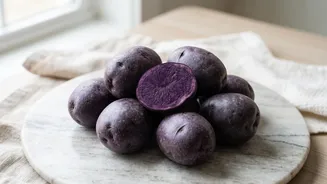






The humble potato, a staple on nearly every Indian plate, has a surprising new look. Imagine a potato with deep purple skin and flesh, a vibrant hue that signals not a novelty, but a powerhouse of nutrition hiding in plain sight.
Meet Kufri Jamunia and Kufri Neelkanth
Indian agricultural science
has delivered a colourful twist to the everyday aloo. Scientists at the ICAR-Central Potato Research Institute (ICAR-CPRI) in Shimla have developed specialty purple potato varieties. The first was 'Kufri Neelkanth', released in 2018, which features a dark purple skin but with cream-coloured flesh. More recently, 'Kufri Jamunia', released in 2024, has taken this a step further with both purple skin and vibrant purple flesh. This development is part of a larger push towards 'biofortification' — a process of breeding crops to increase their nutritional value. These potatoes are not just a feast for the eyes; their colour is the key to their enhanced health benefits.
The Science of Colour: What Are Anthocyanins?
The secret behind the purple colour is a group of natural pigments called anthocyanins. These are the same compounds that give blueberries, jamun, and purple cabbage their rich, dark colours. Think of anthocyanins as a plant's internal defence mechanism. They act as powerful antioxidants, protecting the plant's cells from damage caused by environmental stressors like sunlight. When we consume plants rich in these pigments, we can also benefit from their protective properties. In Kufri Jamunia, the presence of anthocyanins throughout the flesh, not just the skin, makes it particularly nutrient-dense.
A Boost for Your Health
Anthocyanins are celebrated for their potent antioxidant and anti-inflammatory effects. Scientific studies suggest that a diet rich in these compounds may help protect against a range of non-communicable diseases. Their benefits are linked to improving cardiovascular health, with some studies indicating they may help reduce blood pressure. The antioxidant properties of anthocyanins help neutralize harmful free radicals in the body, which are unstable molecules that can damage cells and contribute to ageing and disease. Some research also points towards their potential role in improving brain function and protecting against certain cancers. While a potato alone isn't a cure-all, incorporating biofortified foods like Kufri Jamunia can be a simple way to boost your intake of these beneficial compounds.
More Than Just a Pretty Potato
Beyond its striking colour, Kufri Neelkanth and Kufri Jamunia are packed with more nutrients than their conventional counterparts. Kufri Jamunia, for example, contains significantly higher levels of Vitamin C, iron, and zinc. For farmers, these varieties are also good news. They are high-yielding, with Kufri Jamunia capable of producing 32-35 tonnes per hectare under recommended practices. They are also bred for good storability, meaning they don't sprout or spoil as quickly as some other varieties, which is a major advantage for both farmers and consumers. These varieties have been specifically developed for cultivation across the North Indian plains, including in states like Punjab, Haryana, Uttar Pradesh, and Bihar.
The Bigger Picture: Nutritional Security
The development of these purple potatoes is part of India's broader strategy to combat 'hidden hunger' — a lack of essential vitamins and minerals in the diet, even when calorie intake is sufficient. Biofortification aims to make staple foods, which are eaten by a large part of the population, more nutritious from the ground up. ICAR has also been working on biofortified versions of rice, wheat, and millet, enriching them with vital nutrients like zinc and iron. By introducing these nutrient-dense varieties into the food supply, India is taking a proactive step towards improving public health and ensuring longterm nutritional security for its population.