




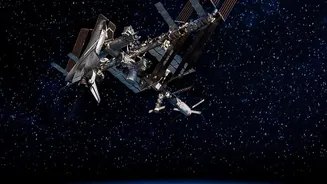

Introducing the Bharatiya Antariksha Station
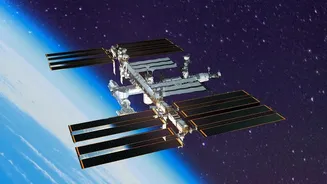
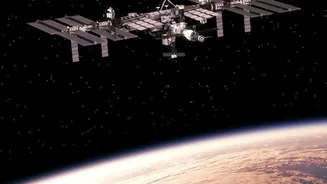
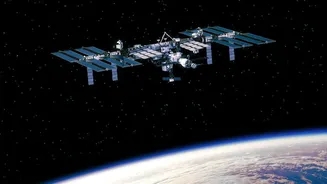
By 2035, India plans to operate its own modular space station, named the Bharatiya Antariksha Station (BAS), in low-Earth orbit. The Indian Space Research Organisation (ISRO) has confirmed this timeline, with the first of five modules scheduled for launch
in 2028. This orbital outpost, weighing around 52 tonnes, will orbit approximately 400-450 kilometres above Earth. It is designed to host three to four astronauts for long-duration stays of three to six months, serving as a permanent address for India in space. The project is not just a structure but a bustling hub for scientific discovery, designed to position India as a major player in space exploration.
The Gaganyaan Gateway
The space station is impossible to imagine without its precursor, the Gaganyaan mission. Gaganyaan is India's inaugural human spaceflight programme, designed to send a crew of three astronauts into a 400 km orbit for a three-day mission and bring them safely back to Earth. It's the ultimate testbed. Every piece of technology developed for Gaganyaan—from the human-rated LVM3 rocket and life support systems to the crew escape and re-entry mechanisms—forms the fundamental building blocks for the space station. In short, Gaganyaan is the gateway. Before India can build a home in space, it must first prove it can safely ferry its astronauts there and back. The first crewed Gaganyaan flight is targeted for 2027, following a series of uncrewed test flights.
A Laboratory in the Sky
The primary purpose of the Bharatiya Antariksha Station is science. A permanent orbital laboratory enables experiments that are simply not possible on Earth or during short-duration flights. Scientists will be able to study the long-term effects of microgravity and space radiation on the human body, which is critical for future deep-space missions to the Moon or Mars. The station will also be a unique platform for research in materials science, biotechnology, and pharmaceuticals, potentially leading to the manufacturing of specialized materials and medicines in space. This floating lab will serve as a national hub for innovation, open to researchers from universities, startups, and international partners.
Connecting the Dots in India's Space Saga
The space station isn't an isolated project but the crown jewel of a coherent, long-term strategy. ISRO's journey has been one of methodical steps, each success building on the last. The early focus on satellite development and launch autonomy with vehicles like the PSLV and GSLV established India's core capabilities. Ambitious interplanetary missions like Chandrayaan (to the Moon) and Mangalyaan (to Mars) demonstrated ISRO's prowess in deep-space navigation and exploration. The Gaganyaan mission now develops the crucial human spaceflight component. The Bharatiya Antariksha Station takes all these threads—launch capability, long-duration mission management, and human spaceflight—and weaves them together. It represents a shift from exploration to sustained presence.
The Path to 2035 and Beyond
The road to the BAS is a multi-stage process. The first module, which has already been approved, is set for a 2028 launch. This will likely be followed by a core module, science labs, and docking ports, assembled in phases to achieve full operational capability by 2035. This phased approach allows ISRO to test and validate each component systematically. Looking even further ahead, the experience gained from building and operating the station is a critical stepping stone for even grander ambitions. ISRO has set its sights on a crewed lunar mission by 2040. The BAS will be the training ground where India prepares its astronauts and tests the technologies needed to once again reach for the Moon, this time with a human footprint.