

The Science of Surface Area vs. Volume
The core reason you can't simply divide the cooking time is the relationship between surface area and volume. Heat cooks food from the outside in. When you make a smaller cake or roast, you decrease its total volume, but you don't proportionally decrease the distance
the heat must travel to reach the center. For example, a cake with half the batter in the same pan will be much thinner. It will cook faster, but not in exactly half the time, because the heat transfer dynamics have changed. Smaller items have a higher surface area-to-volume ratio, which means they lose heat more quickly but also absorb it differently. Thinking about the depth of the food is more important than just its total weight or volume.
A Rule of Thumb for Baking and Roasting
Baking and roasting are where this principle is most critical. For casseroles, cakes, and roasted meats, there's no perfect mathematical formula, as it can vary from 5% to 50% less time. However, a reliable starting point is to reduce the original cooking time by about 25% and begin checking for doneness from there. So, if a large lasagne recipe calls for 60 minutes in the oven, start checking your smaller version around the 45-minute mark. It’s always better to check early. You can always cook something for longer, but you can never un-bake an overcooked dish. For things like cookies or muffins, which already cook quickly, start checking a few minutes earlier than the original recipe suggests.
Consider Your Cookware
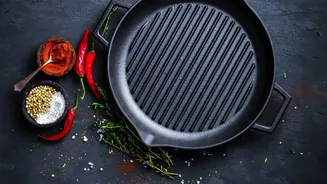
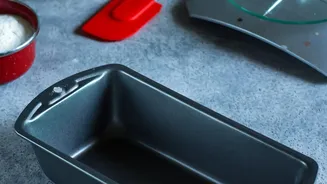
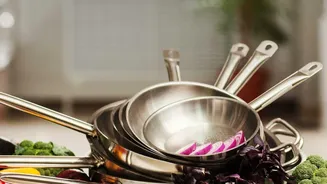
The pan you use is just as important as the time and temperature. Using the same large pan for a halved recipe will create a thinner, more spread-out layer of food that cooks much faster and is prone to drying out. Ideally, you should scale down your cookware to match the reduced quantity. To do this properly, you can calculate the surface area of the original pan and find a new pan that is roughly half that size. For example, a 9x13 inch pan (117 sq inches) halved is best suited for an 8x8 inch pan (64 sq inches). Keep in mind that different materials conduct heat differently; a cast-iron skillet gets hotter and retains heat more intensely than a glass or metal baking dish, which will also affect your final cooking time.
Stovetop Sautéing and Simmering
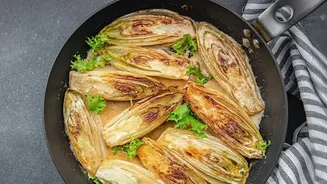
Cooking on the stovetop behaves a bit differently. For tasks like sautéing, where you're cooking small pieces in a single layer, halving the ingredients in a smaller pan might not change the cooking time much at all. The goal is to brown the food, and that takes a certain amount of time at a given temperature regardless of the total volume. For simmering, like with soups and stews, the time it takes to bring the liquid to a boil will be shorter with a smaller volume. However, the simmering time required to tenderise ingredients and meld flavours may remain almost the same. This is especially true for tougher cuts of meat in a braise, which need a long, slow cooking period to break down connective tissues, regardless of the batch size.
Your Best Tools: Senses and a Thermometer
Ultimately, recipe timings are just a guide. The most reliable way to know when your food is done is to use your senses and a few key tools. Look for visual cues like golden-brown colour and bubbling edges. Use a skewer or toothpick to check if a cake's centre comes out clean. And most importantly, invest in a good instant-read thermometer. It takes all the guesswork out of cooking meat, poultry, and even bread. Checking the internal temperature is the only surefire way to know your food is cooked through to a safe and delicious temperature. When scaling down a recipe, be extra vigilant. Check on your food more frequently than the original recipe suggests to prevent it from going from perfect to overdone in a matter of minutes.