






What Makes a City ‘Cosmic’?
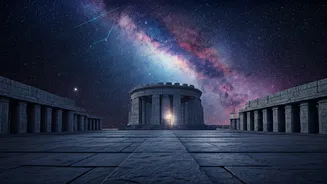
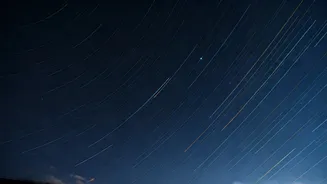
For millennia, humans have used the sky as a clock, calendar, and compass. It’s no surprise that this deep connection is etched into the very foundations of their most ambitious projects. A 'cosmic city' isn't just a settlement; it's a statement in stone
and earth, deliberately aligned with celestial events. This practice, studied by the field of archaeoastronomy, reveals a worldview where life on Earth and the movements of the heavens were deeply intertwined. Famous examples like the Great Pyramid of Giza, aligned with the cardinal points, or Stonehenge, which frames the solstice sun, have fascinated us for centuries. They show that ancient builders possessed remarkable observational skills and the architectural knowledge to mirror the heavens on Earth. These weren't just for farming or religious rituals; they were complex expressions of power, cosmology, and a society's place in the universe.
Lost Cities Emerge from the Amazon
For centuries, the Amazon was dismissed as a pristine wilderness, too inhospitable to support large, complex societies. That assumption has been dramatically overturned. Using LiDAR technology—a form of laser mapping from the air—archaeologists have digitally peeled back the dense rainforest canopy to reveal what lies beneath. The results are staggering. In regions of Bolivia and Ecuador, researchers have found vast networks of ancient cities, complete with pyramids, plazas, and wide, straight roads connecting settlements over huge distances. The Casarabe culture in Bolivia (500-1400 C.E.) and an even older society in Ecuador's Upano Valley, dating back at least 2,500 years, showcase a level of urbanism previously thought impossible for the region. These were not small villages but sprawling, engineered landscapes, challenging the long-held idea of the Amazon as an 'empty' forest.
The New Questions Being Asked
The discovery of these Amazonian cities doesn't just add new sites to the map; it raises fundamental questions. The sheer scale and organisation imply sophisticated social structures and planning. How did these societies manage such large populations and engineer vast landscapes without deforestation on the scale we see today? Furthermore, while the function of many structures is still being investigated, their careful arrangement suggests a deep connection to cosmology. Were the long, straight causeways aligned with celestial events, serving a ritual as well as a practical purpose? A global survey of ancient sites has shown that while many align with solstices or lunar events, the orientation of a surprising number of sites remains unexplained, pushing researchers to consider new theories. These lost cities are forcing archaeologists to rethink not just the history of the Amazon, but the very definition of urbanism and the diversity of ancient cultures.
Technology Rewriting the Past
The engine driving many of these new questions is technology. LiDAR has been a game-changer for archaeology, allowing researchers to map terrain in a fraction of the time it would take on the ground, all without cutting a single tree. It can reveal subtle earthworks, ancient road systems, and the true extent of settlements that are invisible from the ground. This is complemented by advances in fields like ancient DNA analysis, which can uncover the history of populations, and soil chemistry, which can reveal ancient farming practices. By combining these modern tools, scientists can build a far richer and more nuanced picture of the past. They are discovering not just where people lived, but how they lived, what they ate, and how they reshaped their environment in sustainable ways that could offer lessons for today.