





First, What Is 'Feta-Style' Cheese?
Before diving into salads, it helps to know what we're working with. True feta is a Greek product with a Protected Designation of Origin (PDO), meaning only cheese made in specific regions of Greece with at least 70% sheep's milk can legally be called
'feta' in the EU. It's brined, giving it a distinct salty and tangy flavor. However, many countries produce their own 'feta-style' cheeses. Bulgarian feta is often tangier, French feta is creamier, and American versions, typically made from cow's milk, are usually milder. These variations offer a range of textures and tastes for your culinary experiments.
The Classic, Elevated
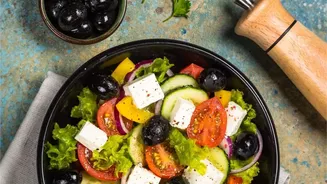
The traditional Greek salad—tomato, cucumber, red onion, and olives—is a classic for a reason. But you can elevate it. Start with the best ingredients: ripe, juicy tomatoes and crisp cucumbers. Instead of crumbling the feta, try serving it as a whole slab on top, drizzled with high-quality olive oil and a sprinkle of oregano. You can also introduce fresh herbs like mint or dill for another layer of flavour. For added protein and texture, consider adding chickpeas, turning a simple side into a satisfying main course.
Get Warm: Baked Feta Salads
Baking feta transforms its texture from crumbly to warm, soft, and incredibly creamy, while mellowing its salty bite. A popular method involves placing a block of feta in an ovenproof dish with cherry tomatoes, garlic, and herbs, then baking until the tomatoes burst and the cheese is golden. This creates a delicious, self-saucing salad base. You can serve it with a fresh cucumber salad on the side for contrast or simply with crusty bread for dipping. Another approach is to bake feta cubes tossed in olive oil and oregano for about 10 minutes to create warm, savoury croutons for your greens.
Whip It Good: A Creamy Salad Base
Whipped feta has become a modern Mediterranean staple, and for good reason. By blending feta with Greek yogurt or cream cheese, olive oil, and lemon juice, you create a smooth, tangy, and luxurious base for any salad. Spread a generous layer of whipped feta on a plate or shallow bowl and top it with a simple salad of chopped tomatoes, cucumbers, and fresh herbs. The contrast between the cool, creamy feta and the crisp, fresh vegetables is delightful. This technique turns a standard salad into a more substantial and elegant dish.
Go Beyond the Greens: Grain Bowls
Mediterranean salads aren't just about lettuce. Hearty grain bowls make a fantastic, filling meal. Use a base of cooked quinoa, farro, or couscous, and then load it up with classic Mediterranean ingredients. Combine your chosen grain with chopped cucumber, tomatoes, roasted red peppers, and chickpeas. Toss everything with a simple lemon vinaigrette and finish with a generous crumble of feta. These bowls are perfect for meal prepping, as they hold up well and the flavours continue to meld.
A Sweet and Salty Contrast
Feta's salty tang pairs wonderfully with sweet fruits. The most famous example is the watermelon and feta salad, often served with fresh mint. It's a refreshing and simple combination perfect for hot weather. But don't stop there. Feta also works well with stone fruits like peaches and nectarines, or with berries. For something different, try a salad with spring greens, pomegranate seeds, and pistachios, all brought together with a honey vinaigrette and crumbled feta. The sweet, salty, and crunchy elements create a complex and satisfying flavour profile.