



The Art of Deception
The knuckleball is a type of slower delivery used by pace bowlers to trick the batsman. While the bowler's arm action looks identical to a standard fast delivery, the ball itself arrives much slower than anticipated. This sudden drop in speed causes the batsman,
who is already committed to a shot based on the bowler's action, to play too early, resulting in a mishit or a complete miss. Unlike other slower balls, the knuckleball's defining characteristic is its lack of spin, which creates an erratic, unpredictable flight path that can confuse even the most set batsmen.
The Physics of the Float
Contrary to its name, the knuckleball isn't held with the knuckles. Instead, the bowler grips the ball with the tips of their fingernails, digging them into the seam. The ball is essentially pushed out of the hand rather than being propelled by a snap of the wrist. This unique release method imparts almost no rotation on the ball. As the non-spinning ball travels through the air, the seam creates an uneven, fluctuating aerodynamic force. This causes it to wobble and dip suddenly, a phenomenon even the bowler can't fully predict. It floats like a butterfly before plunging downwards, deceiving the batsman who might initially mistake it for a benign full toss.
The Pioneer: Zaheer Khan
In modern international cricket, Zaheer Khan is widely regarded as the bowler who popularised the knuckleball. He first unveiled it to great effect during India's victorious 2011 ICC World Cup campaign. Having struggled to perfect other slower ball variations that didn't suit his bowling action, Zaheer found the knuckleball a natural fit. He used it to claim crucial wickets, most notably dismissing Michael Hussey in the quarter-final against Australia and Ian Bell against England. Zaheer’s version often involved crooking his forefinger and flicking the ball out, causing it to dip sharply and skid off the pitch, cementing the delivery's status as a match-winning weapon.
The Craftsman: Bhuvneshwar Kumar
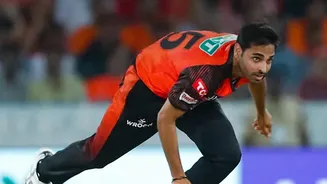
If Zaheer Khan was the pioneer, Bhuvneshwar Kumar became the modern craftsman of the knuckleball. Known for his prodigious swing bowling, Kumar added the knuckleball to his arsenal to become a formidable force, especially in T20 cricket. His method differs slightly from Zaheer's; he uses the tips of both his index and middle fingers on the seam with his thumb providing support below. This grip causes the ball to wobble more in the air and 'stop' on the batsman, rather than just dipping. This variation, which he worked on extensively during the IPL, has helped him claim numerous wickets, including a five-wicket haul against South Africa in a T20I where the delivery was used to great effect.
The Specialist: Andrew Tye
Australian pacer Andrew Tye built a reputation in T20 leagues worldwide as a knuckleball specialist. For Tye, it became his primary weapon, a delivery he spent five to six years perfecting. He demonstrated its devastating potential on his IPL debut, taking a hat-trick and a five-wicket haul, with four of those wickets coming from knuckleballs. Tye often uses a cross-seam grip, which he feels gives him better control. His success highlighted how the delivery had evolved from a surprise variation into a go-to option for bowlers in the high-stakes environment of death overs in T20 cricket.