





Velavadar National Park: A Sea of Blackbucks
Imagine a vast, golden grassland stretching to the horizon, dotted with thousands of elegant blackbucks. This is the scene at Velavadar National Park, a unique tropical grassland ecosystem and one of the largest blackbuck populations in India. Established
in 1976, this park near Bhavnagar is not just about its most famous resident. It is a prime habitat for the endangered Indian grey wolf, the apex predator of this landscape. Visitors might also spot striped hyenas, jungle cats, and nilgai. For birdwatchers, Velavadar is a global hotspot. It is one of the world's largest roosting sites for harriers during winter, with thousands migrating from Central Asia. The park is also a critical breeding ground for the endangered Lesser Florican, known for its spectacular leaping courtship display during the monsoon. The best time to visit is from mid-October to mid-June, with the park remaining closed during the monsoon.
Nalsarovar Bird Sanctuary: A Wetland Wonderland
Just a short drive from Ahmedabad, Nalsarovar Bird Sanctuary is a sprawling 120-square-kilometre wetland paradise. As a designated Ramsar site, this shallow lake with its 36 islands becomes a bustling avian metropolis every winter. Over 250 species of birds have been recorded here, with migratory waterfowl arriving in vast numbers from Siberia and Central Asia. The main attractions are the huge flocks of pink flamingos and rosy pelicans that create a breathtaking spectacle. Visitors can hire a boat and glide through the tranquil waters at sunrise, navigating through colonies of ducks, geese, herons, and cranes. The ideal time to witness this ornithological marvel is from November to February, when the migratory bird population is at its peak and the weather is pleasant.
Marine National Park: India's Underwater Jewel
India's first marine national park, located off the coast of Jamnagar in the Gulf of Kutch, offers a completely different kind of wildlife experience. The park comprises an archipelago of 42 islands, surrounded by vibrant coral reefs, mangroves, and mudflats. The real magic is revealed during low tide when the water recedes, allowing visitors to walk on the seabed and observe marine life up close in the intertidal zone. You can spot octopus, starfish, sea cucumbers, pufferfish, and colourful sponges. The area is also a vital breeding ground for green sea turtles. A permit from the Forest Department is required to visit, and it is crucial to plan your trip according to the tide timings. The best season to explore this underwater world is from October to February, when the tides are low and the skies are clear.
Jessore Sloth Bear Sanctuary: Kingdom of the Bear
Tucked away in the Aravalli hills of Banaskantha district, Jessore is the only sanctuary in Gujarat primarily dedicated to the conservation of the sloth bear. Established in 1978, its rugged, rocky terrain and dry deciduous forests provide the perfect habitat for this reclusive animal. While the sloth bear is the star attraction, the sanctuary is also home to leopards, hyenas, sambar, and nilgai. The park isn't just for mammal-watchers; it offers fantastic opportunities for trekking and birding. A popular trek leads to the ancient Kedarnath Mahadev temple, hidden within the forest. The best time for wildlife sightings and trekking is from October to March. The sanctuary's scenic beauty, with panoramic views of the Aravalli range, makes it a perfect escape for those seeking solitude in nature.
Purna Wildlife Sanctuary: A Dense Tropical Forest
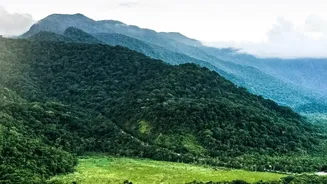
Located in the Dangs district, Purna Wildlife Sanctuary boasts the thickest forest cover in the state, a stark contrast to Gujarat’s drier regions. As part of the Western Ghats, this moist deciduous forest is a biodiversity hotspot, home to around 700 species of plants. Its dense canopy of towering teak and bamboo trees is home to leopards, barking deer, four-horned antelopes, and rhesus macaques. The sanctuary, which gets its name from the Purna River flowing through it, is a haven for birdwatchers, with species like the common grey hornbill and various woodpeckers and flycatchers present. Due to the thick foliage, spotting animals can be challenging, but the immersive experience of walking through such a lush, tropical jungle is a reward in itself. The sanctuary is also home to several tribal communities, adding a rich cultural layer to its natural splendour.