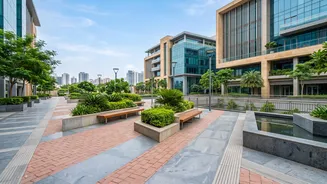








For decades, Indian city streets have been synonymous with vehicular chaos. Now, urban designers are pushing back, championing a return to a more human-scale design where the pedestrian is king. This is why it's happening.
An Escape from Urban Gridlock
Anyone living in an Indian metropolis
knows the daily struggle: endless traffic jams, hazardous air quality, and the constant stress of navigating streets designed for cars, not people. Sidewalks, if they exist, are often broken, encroached upon by vendors, or used as makeshift parking lots, forcing pedestrians into dangerous proximity with traffic. This car-centric model has led to debilitating congestion, lost productivity, and a diminished quality of urban life. Recognising that simply building more flyovers is not a solution, a growing number of urban planners and policymakers are advocating for a fundamental shift: reallocating road space to prioritise people.
The Economic Case for Walking
Walkable neighbourhoods are not just an aesthetic upgrade; they are powerful economic engines. When streets are safe and inviting for pedestrians, local businesses flourish. Studies and real-world examples, like Chennai's transformed Pondy Bazaar, show a direct link between improved pedestrian infrastructure and increased footfall, which in turn boosts sales for local shops and street vendors. This creates a vibrant, street-level economy that is often stifled in car-dominated environments. Furthermore, properties in walkable areas tend to have higher value, making them attractive investments while also reducing household transportation costs for residents.
A Prescription for Public Health
The focus on walkability is also a direct response to India's growing public health challenges. Sedentary lifestyles, exacerbated by a lack of safe and accessible public spaces for physical activity, contribute to a rise in non-communicable diseases (NCDs) like diabetes and heart conditions. Designing cities that encourage 'incidental physical activity' — such as walking to the shops or a nearby bus stop — is seen as a powerful and cost-effective public health intervention. A 30-minute walk can significantly reduce the risk of heart disease. Cleaner air, a direct result of reduced vehicular emissions in walkable zones, further enhances the health benefits for all residents.
Fostering Community and Equity
Streets in traditional Indian cities were more than just transport corridors; they were social spaces where communities interacted. Modern urban design aims to recapture this by creating environments where neighbours congregate and children can play safely. Well-designed public spaces enhance the 'eyes on the street' phenomenon, which naturally improves safety and security. Critically, walkability is also an issue of equity. Poorly maintained or non-existent footpaths disproportionately affect the most vulnerable: the elderly, children, and persons with disabilities, limiting their access to the city. By creating infrastructure that serves everyone, walkability promotes a more inclusive and just urban fabric.
Policy Push and Onstnd Challenges
This shift is supported by national policies like the Smart Cities Mission and the National Urban Transport Policy, which encourage nonstmotorised transport. Cities like Chennai, Pune, and Ahmedabad have already implemented successful projects, creating pedestrian plazas and continuous footpath networks that serve as models. Chennai, for instance, became the first Indian city to adopt a NonstMotorised Transport Policy, transforming over 100 kilometres of streets. However, the challenges are significant. Retrofitting dense, existing urban areas is difficult and expensive. Issues like a lack of institutional support, weak enforcement against encroachments, and fragmented planning remain major hurdles to overcome.