



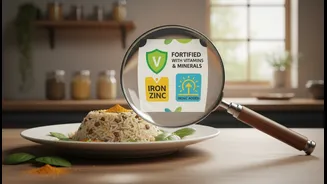



What is Food Fortification?
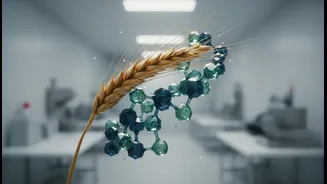
Food fortification is the process of deliberately adding essential micronutrients like iron, folic acid, vitamin B12, and vitamins A and D to staple foods. Think of it as a nutritional top-up for items people consume daily, such as rice, wheat flour,
salt, milk, and oil. The goal is to improve the nutritional quality of the food supply and address deficiencies across a large population without requiring major changes to eating habits. In India, the Food Safety and Standards Authority of India (FSSAI) regulates this process, and fortified products are identifiable by a '+F' logo on their packaging.
The Government’s Big Push on Rice
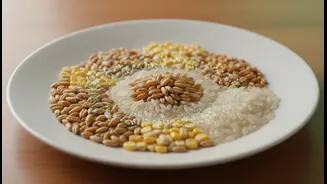
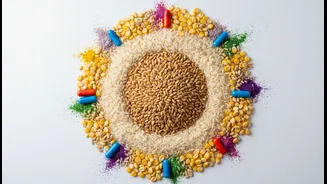
The government has made fortified rice a cornerstone of its nutrition strategy. Following a pilot scheme in 2019, a major nationwide rollout was approved to distribute fortified rice through key social safety nets. These include the Public Distribution System (PDS), the PM-POSHAN scheme for mid-day meals in schools, and the Integrated Child Development Services (ICDS) for young children and mothers. The process involves blending regular rice with Fortified Rice Kernels (FRK), which are enriched with iron, folic acid, and vitamin B12, typically at a ratio of 1:100. By March 2024, the government had achieved 100% fortified rice distribution under its central schemes. However, in early 2026, the programme was temporarily paused after a study raised concerns about nutrients degrading during long-term storage, prompting a need to refine the delivery mechanism.
Why This Strategy is Crucial
India faces a significant public health challenge from micronutrient deficiencies. According to the National Family Health Survey (NFHS-5), a large percentage of children and women suffer from anaemia, which is often caused by iron deficiency. Furthermore, it is estimated that over 70% of the Indian population consumes less than half the recommended daily intake of crucial micronutrients. Fortification is considered a cost-effective and scalable way to combat this 'hidden hunger'. For every ₹1 spent on fortification, the estimated economic and health benefit is nearly ₹9. By enriching staples that are already a part of people's diets, the strategy reaches a vast and diverse population efficiently.
Potential Benefits and Early Results
The primary goal of food fortification is to reduce the prevalence of debilitating deficiencies. Early results from pilot projects have been promising. For instance, a World Food Programme-supported pilot in a district of Odisha showed a 20% reduction in anaemia rates among schoolchildren who received fortified rice through the mid-day meal scheme within just one year. Similar positive outcomes were seen in Haryana, where fortified wheat flour distributed through the PDS led to a marked decrease in micronutrient malnutrition. The long-term vision is to improve cognitive development in children, boost productivity in adults, and strengthen the overall health and resilience of the population.
The Challenges and Criticisms
Despite its potential, the push for mandatory or large-scale fortification is not without its critics. Some health experts argue that it's a reductionist approach that oversimplifies a complex problem. They contend that promoting dietary diversity—encouraging the consumption of millets, pulses, leafy vegetables, and animal products—is a more holistic and sustainable solution. There are also concerns about the risk of 'hypervitaminosis' or nutrient toxicity, especially for individuals who may not need the extra nutrients. Specific health conditions like thalassemia and sickle cell anaemia are contraindications for iron-fortified foods. Others point to logistical challenges, such as ensuring quality control across thousands of small millers and the economic impact on the informal food processing sector. The recent pause in the rice programme due to nutrient loss in storage highlights the practical hurdles that need to be overcome for the initiative to be truly effective.