






What Exactly Is Creatine?
Creatine is not a synthetic substance invented in a lab; it's a natural compound your body already produces from amino acids. The liver, kidneys, and pancreas all create small amounts of it daily. You also consume it through foods like red meat and seafood.
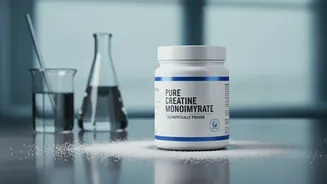
Roughly 95% of the creatine in your body is stored in your skeletal muscles, with the remaining 5% found in the brain. Its primary role is to help your cells produce and recycle energy, particularly during short, intense bursts of activity. Supplementing with creatine monohydrate—the most studied and cost-effective form—simply increases these natural stores, allowing your body to perform at a higher level.
The Fuel for Your Power Output
The main way creatine enhances muscle strength is by improving your body's energy production system. Your cells run on a molecule called adenosine triphosphate (ATP), which is the primary source of energy for muscle contractions. When you perform high-intensity exercises like sprinting or lifting weights, your muscles burn through ATP very quickly. Creatine helps replenish these ATP stores at a rapid rate. By increasing the availability of phosphocreatine in your muscles, supplementation allows you to regenerate ATP faster. This means you can sustain high-intensity effort for longer, push out an extra rep or two, and handle heavier loads. Over time, this increased work capacity leads to greater gains in muscle strength and mass.
A Surprising Boost for Your Brain
The benefits of creatine aren't limited to your muscles. Your brain is an incredibly energy-demanding organ that also relies on ATP to function properly. Just as it does in muscles, supplemental creatine can increase energy availability in brain cells. A growing body of research suggests this can lead to tangible cognitive benefits. Studies have shown that creatine may improve short-term memory, processing speed, and reasoning skills. These effects appear to be most pronounced in situations where the brain is under stress, such as during periods of sleep deprivation or intense mental fatigue. Some research also points to potential benefits for older adults and vegetarians, who may have naturally lower creatine levels.
How to Use Creatine Effectively
Using creatine is straightforward. The most common and well-researched form is creatine monohydrate. While some people start with a "loading phase" of about 20 grams per day for 5-7 days to saturate their muscles quickly, it is not necessary. You can achieve the same saturation levels by simply taking a maintenance dose of 3-5 grams per day, though it will take a few weeks. Taking this smaller daily dose can also help minimize the risk of gastrointestinal discomfort that sometimes occurs with the higher loading dose. Consistency is more important than timing, but taking it with a meal containing carbohydrates and protein may slightly enhance its absorption.
Is It Safe and Who Is It For?
Creatine is one of the most extensively studied supplements available and has an excellent safety profile for healthy adults. The most common side effect is a slight increase in body weight due to water retention within the muscle cells, which is not fat gain. Some individuals may experience minor stomach discomfort or bloating, especially with higher doses. Despite old myths, controlled studies have not shown that creatine causes kidney damage in healthy individuals or an increase in muscle cramps. People with pre-existing kidney disease should consult a doctor before use. Otherwise, it is considered safe and beneficial for a wide range of people, from athletes looking to improve performance to older adults aiming to preserve muscle mass and cognitive function.