
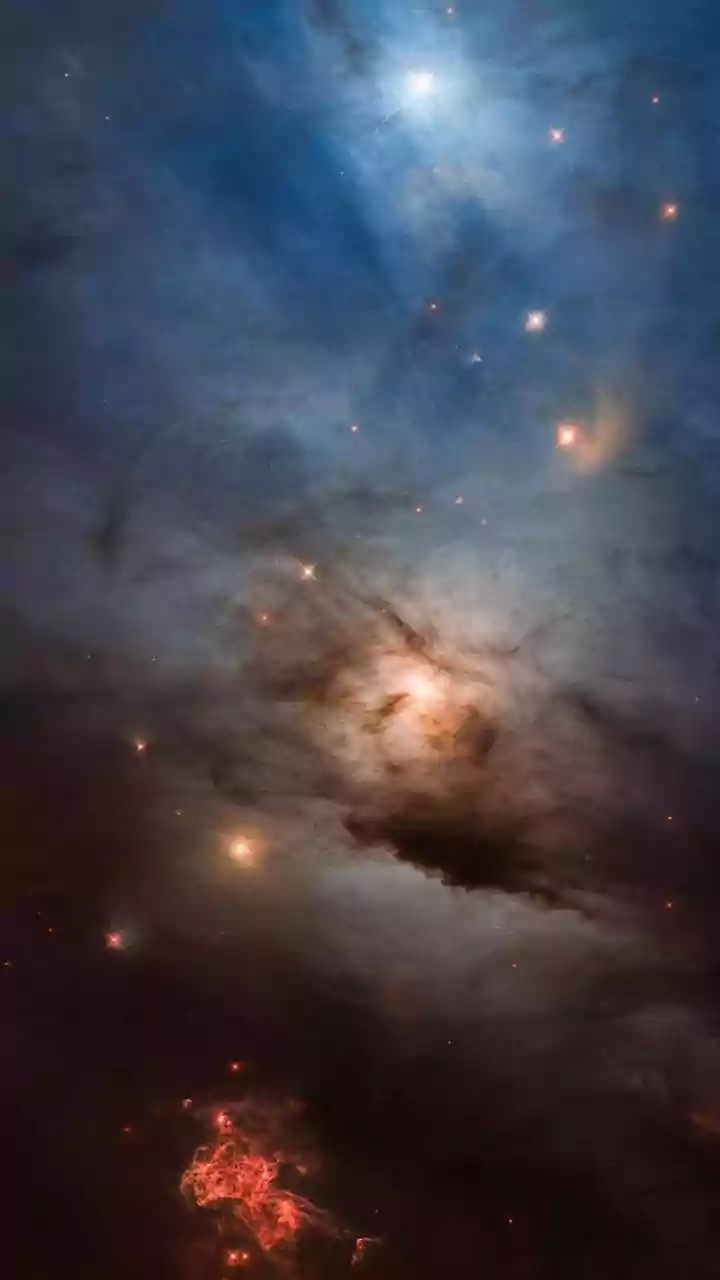
A New Window on the Cosmic Dawn
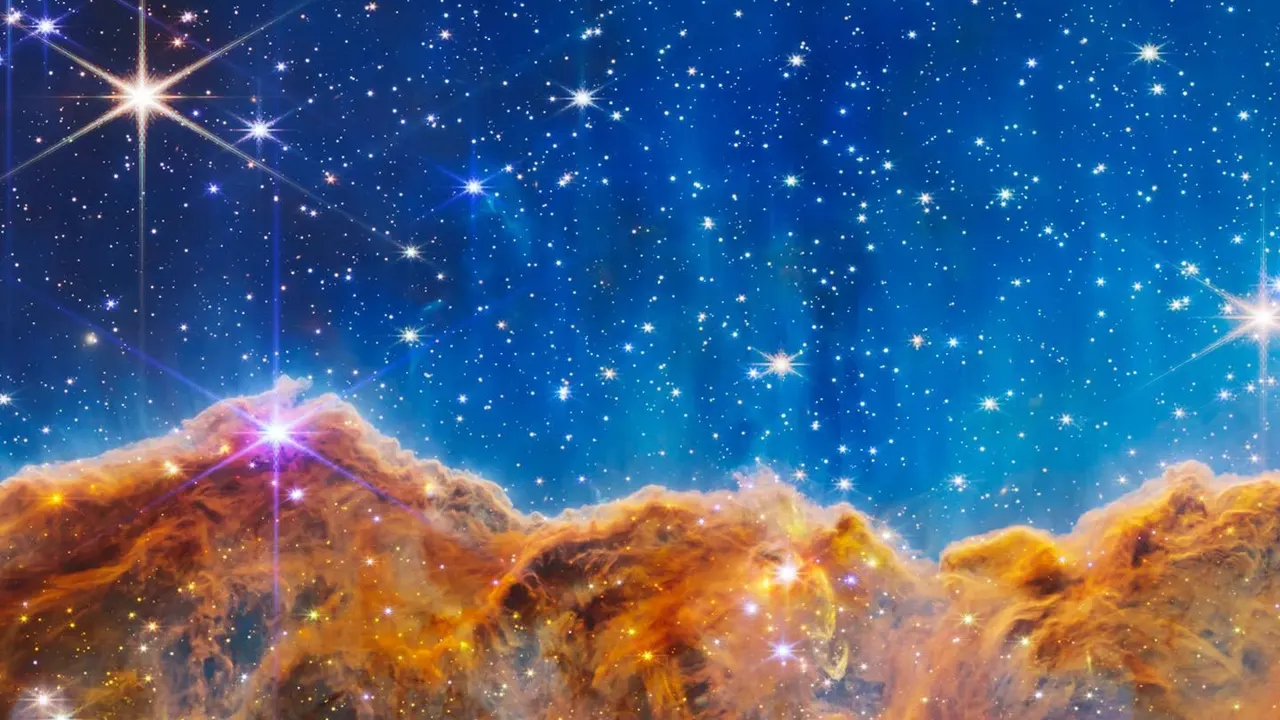
Since beginning its science operations, the James Webb Space Telescope (JWST) has been transforming astronomy with its unparalleled ability to see the universe in infrared light. This capability is especially crucial for studying the birth of stars. Recent
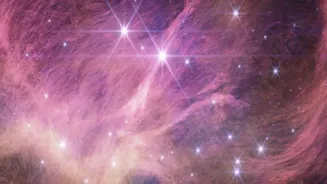
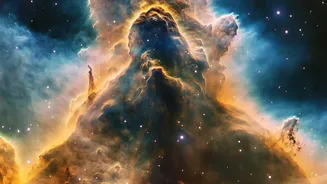
analyses of images, including iconic ones like the 'Cosmic Cliffs' in the Carina Nebula, have provided a stunningly detailed look into regions where stars are born. By observing in specific infrared wavelengths, astronomers have unveiled dozens of previously hidden jets and outflows from extremely young stars, offering a fresh perspective on how stars like our own Sun come into being. These observations are not just beautiful pictures; they are rich data sets that are helping scientists piece together the story of cosmic evolution.
What Are Cosmic Star Nurseries?
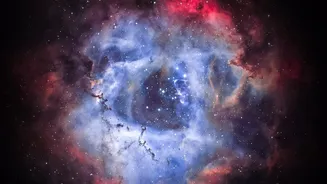
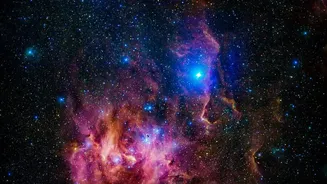
Cosmic star nurseries are vast, dense clouds of gas and dust, often called molecular clouds. Within these colossal structures, gravity begins to pull clumps of material together. As these clumps grow denser and hotter, they form protostars—the embryonic stage of a star. For a long time, these nurseries were largely opaque to telescopes like Hubble, which primarily see in visible light. The thick dust that fuels star formation also acts like a shroud, hiding the processes happening deep inside. These nurseries are chaotic environments where newborn stars not only gather mass from a surrounding disk but also blast powerful jets of material from their poles back into space.
The Power of Infrared Vision
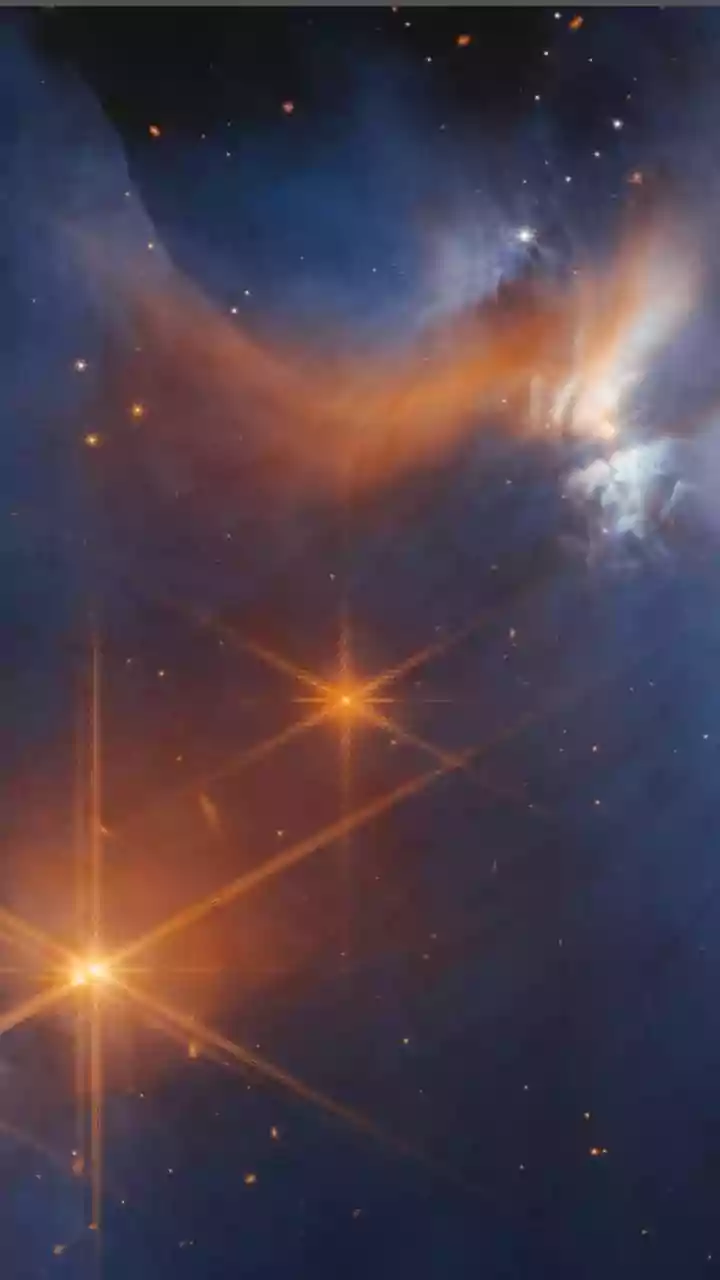
The magic of the JWST lies in its ability to detect infrared light. While visible light is blocked by the thick dust of stellar nurseries, infrared light can pass through it, much like how X-rays can see through skin. This allows Webb to peer inside these clouds and witness the star formation process directly. Using its Near-Infrared Camera (NIRCam) and Mid-Infrared Instrument (MIRI), Webb can detect the faint heat of newly forming protostars and the glow of molecular hydrogen being ejected in powerful jets. This has enabled researchers to identify features that were completely invisible before, such as the intricate structures of stellar outflows and even evidence that some protostars are actually binary systems.
Unprecedented New Details
One of the most significant recent discoveries involves analyzing data from the Cosmic Cliffs region of star cluster NGC 3324. Scientists found two dozen previously unknown energetic outflows from infant stars. These outflows, which look like everything from small fountains to massive jets extending for light-years, are a crucial part of a star's development, influencing how much mass it ultimately retains. In other observations, Webb has precisely measured the chemical composition of these regions, identifying ices and complex organic molecules that are the raw ingredients for future planets. It has even provided the first clear evidence of how water transitions from ice to vapor as it gets closer to a young star, a critical step in creating environments where habitable planets could form.
Rewriting the Story of Starbirth
These new details are not just additions to our knowledge; they are fundamentally reshaping our understanding of star and galaxy formation. For instance, observations suggest that more massive star clusters emerge from their birth clouds much faster than less massive ones, clearing away gas and lighting up their host galaxies sooner. This helps explain the structure and evolution of entire galaxies. Furthermore, studies of 72 young star systems have shown that the formation of gas giant planets like Jupiter is a race against time. These planets must gather their immense atmospheres from the surrounding disk of gas before that material is blown away by the young star's winds and jets. By cataloging these processes, Webb is providing the essential data needed to refine and correct our models of how everything in the cosmos, from a single star to a massive galaxy, comes to be.