





In the global race for technological supremacy, semiconductors are the grand prize. Now, India is making its most audacious move yet, with a new facility in Assam serving as a cornerstone of its massive $23 billion push into chipmaking.
Assam's High-Tech Future
In Jagiroad, Assam,
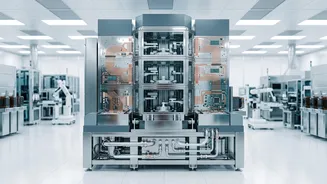
a quiet industrial transformation is underway. Tata Electronics is building a massive Outsourced Semiconductor Assembly and Test (OSAT) facility, with an investment of ₹27,000 crore. Unlike a fabrication plant that creates chips from silicon wafers, this facility will perform the critical 'back-end' tasks: receiving finished wafers, cutting them, and then assembling, packaging, and testing the individual chips before they are sent to electronics manufacturers. Pilot production has already begun, with commercial operations expected to start between late 2026 and early 2027. Once fully operational, the plant is projected to handle an incredible 48 million chips per day, serving global demand for the automotive, telecom, and consumer electronics industries.
The $23 Billion National Blueprint
The Assam plant is not an isolated project; it's a key component of the ambitious India Semiconductor Mission (ISM). The government has earmarked roughly $23 billion in incentives to build a comprehensive domestic chip ecosystem, aiming to reduce the nation's heavy reliance on imports and fortify its supply chains. India currently imports over 80% of its semiconductor needs, a vulnerability that became starkly clear during global shortages. The mission, now entering its second phase (ISM 2.0), provides significant financial support—up to 50% of a project's cost—to attract companies to set up fabrication, assembly, and display manufacturing units in the country.
A Nationwide Effort
While the Assam facility is a major milestone, it is part of a broader national strategy with several moving parts. In Gujarat, US-based Micron has already started commercial production at its own ATMP facility in Sanand, shipping 'Made in India' memory products to global customers. The combined investment in that project is around $2.75 billion. Meanwhile, Tata Group is also building India’s first major semiconductor fabrication plant in Dholera, Gujarat, in partnership with Taiwan's Powerchip. This 'fab' represents the next level of ambition: manufacturing chips from raw wafers, a far more complex and capital-intensive process. These projects illustrate India's two-pronged strategy: quickly build capacity in assembly and testing while simultaneously developing the more challenging fabrication capabilities.
The Challenges on the Road Ahead
India's path to becoming a semiconductor hub is filled with significant hurdles. Building a chip ecosystem from the ground up is immensely challenging. Key obstacles include the enormous capital required for fabrication plants, which can run into billions of dollars. There is also intense competition from established global players in Taiwan, South Korea, and China, which have decades of a head start. Furthermore, the industry requires a consistent supply of ultra-pure water and uninterrupted power, which can be an infrastructural challenge. Perhaps most critically, while India has a vast pool of design engineers, there is a shortage of the specialised shop-floor talent needed for manufacturing, assembly and testing.
Why This Push Matters for India
Despite the challenges, the strategic importance of this mission cannot be overstated. Success would mean far more than just economic gains. For Assam, the Tata plant is expected to create over 27,000 direct and indirect jobs, transforming the regional economy. On a national level, a domestic chip industry would drastically cut India's import bill, enhance national security by securing the supply of critical components, and create a robust ecosystem for electronics manufacturing. It represents a foundational shift, moving India from a consumer of technology to a producer. This ambition is about securing India’s place in the future of the global economy and gaining technological self-reliance, or 'Aatmanirbhar Bharat'.