







Understanding Joint-Friendly Movement
The key to comfortable exercise lies in choosing low-impact activities. Unlike high-impact exercises such as running or jumping, which involve both feet leaving the ground and creating a jarring force upon landing, low-impact workouts keep one foot on the ground at all
times. This minimises stress on your joints—particularly your knees, hips, and ankles. The goal isn't to avoid activity, but to choose movements that build strength and mobility without causing pain. Strengthening the muscles around your joints provides better support and stability, which can actually reduce discomfort over time. Think of it as building a natural brace for your body.
Top Low-Impact Exercises for Beginners
You don't need complicated equipment to get started. Many of the best joint-friendly exercises are simple and accessible. Walking is a fantastic starting point as it's free, can be done anywhere, and is gentle on the joints. Cycling, whether on a stationary bike or outdoors on flat terrain, is another great option that strengthens leg muscles without the impact. Swimming and water aerobics are often called the ultimate joint-friendly workouts because the water's buoyancy supports your body weight, removing pressure from your joints while providing gentle, full-body resistance. Mind-body practices like yoga and Tai Chi are also excellent for improving flexibility, balance, and core strength with controlled, gentle movements.
How to Adapt Common Exercises
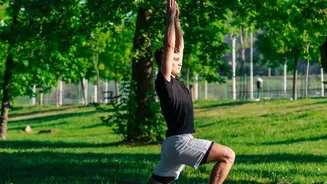
You don't have to give up on traditional strength exercises. With a few smart modifications, you can make them work for you. For squats, if a full deep squat causes pain, start with a partial squat or use a chair for support, only going as deep as feels comfortable. A 'box squat', where you slowly lower yourself to sit on a chair before standing back up, is a safe way to learn the form. For lunges, which can be tough on the front knee, try reverse lunges instead; stepping backward puts less stress on the knee joint. When it comes to pushups, doing them on your knees or against a wall reduces the load on your wrists and shoulders while still building upper body strength.
Listen to Your Body: Good Pain vs. Bad Pain
It's crucial to learn the difference between muscle fatigue and joint pain. The gentle burn of a working muscle is a sign you're getting stronger. However, sharp, stabbing, or intense pain in your joints is a signal to stop. Exercise should not make your underlying joint issues worse. Pay attention to your body and never push through significant pain. If a movement hurts, try reducing the range of motion or switching to a different exercise. The motto is 'challenge, don't punish'. Consulting a doctor or physical therapist can provide personalised advice, especially if you have a pre existing condition like arthritis.
The Nonstoppable WarmUp and CoolDown
Never skip the warmup or cooldown. A 5–10 minute warmup prepares your body for exercise by gradually increasing your heart rate and blood flow. This makes muscles more flexible and lubricates the joints, which is crucial for reducing stiffness and preventing injury. Dynamic stretches like arm circles and leg swings are ideal. After your workout, a 5–10 minute cooldown helps your heart rate return to normal gradually and can help reduce muscle soreness. This is also the perfect time for static stretches, holding each for $20–30$ seconds to improve flexibility. These simple routines are essential for long term joint health.