


The Great Monsoon Snack-Off
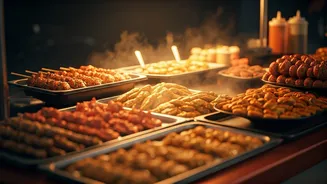
As the smell of wet earth fills the air, a great debate quietly unfolds in millions of households and street-side stalls. It’s a rivalry as old as time, a clash of culinary titans that defines the Indian rainy season. In one corner, we have the structured,
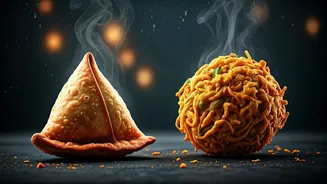
regal Samosa, a pastry pocket of perfection. In the other, the free-spirited, endlessly adaptable Pakora, a fritter for every mood. [19] This isn't just about food; it's about tradition, nostalgia, and the simple joy of finding warmth on a damp, grey day. The craving for hot, fried foods during cooler, wet weather is a natural response, a way our bodies seek warmth and comfort. [22] And in India, that comfort is spelled S-A-M-O-S-A or P-A-K-O-R-A.
In This Corner: The Mighty Samosa
The Samosa is an icon. With its distinct triangular shape and crisp, flaky shell, it’s a marvel of food architecture. [16, 19] Though deeply synonymous with Indian cuisine, the samosa is a well-travelled immigrant, with origins tracing back to Central Asia and Persia, where it was known as 'sanbosag'. [7, 8, 10] It arrived in India around the 13th or 14th century, introduced by chefs and traders during the Delhi Sultanate. [8, 12] Here, it transformed, embracing a filling of spiced potatoes and peas that has become its most beloved form. [8] The beauty of the samosa is its balance: a sturdy, golden-fried pastry giving way to a soft, flavourful interior. It’s a self-contained snack, perfect with a side of tangy tamarind or refreshing mint chutney. [16]
And In The Other: The Versatile Pakora
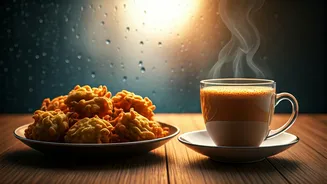
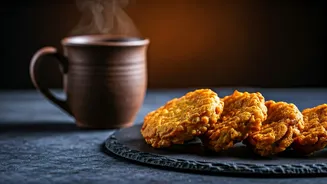
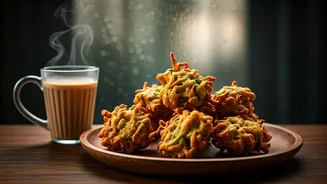
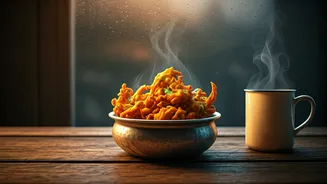
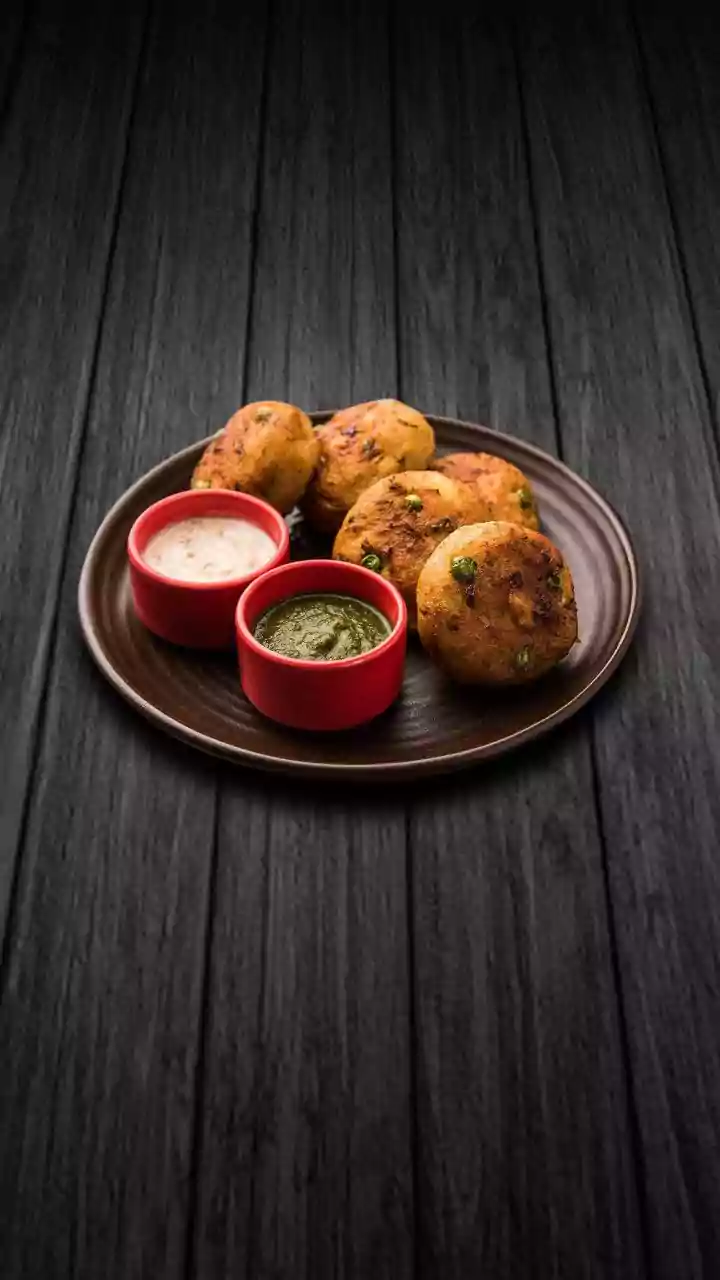
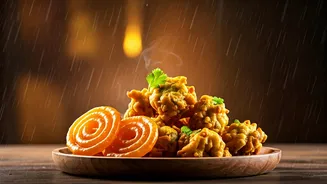
If the samosa is a carefully constructed masterpiece, the pakora is an explosion of delicious chaos. [19] Derived from the Sanskrit word 'pakvavata', meaning 'cooked lump', pakoras are all about immediacy and variety. [25] Essentially, various ingredients like sliced onion, potato, spinach, or paneer are coated in a spiced gram flour (besan) batter and deep-fried until crunchy. [16, 25] Unlike the uniform samosa, every pakora is unique—a craggy, golden nugget of joy. Pakoras feel more like a home-cooked hug; they’re what you whip up on a whim when the rain starts to fall. [5] From the classic onion pakora (kanda bhaji) to spinach and potato variations, their sheer diversity is their greatest strength. [13, 19]
The Wildcard: Smoky Bhutta
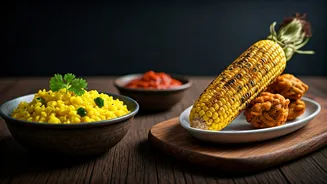
Just when you think the debate is a two-horse race, a smoky aroma drifts in from the street corner. It's the Bhutta-walla, roasting corn on the cob over a small coal fire. [20] A quintessential monsoon street food, the bhutta is cherished across India. [15, 18] Once roasted, the corn is rubbed with a mixture of lemon, salt, and chilli powder, creating a flavour profile that is smoky, tangy, and spicy all at once. [18, 20] While fried snacks offer a comforting crunch, the bhutta provides a healthier, yet equally satisfying, alternative. [21] It’s the experience of watching it being prepared and eating it hot off the coals that makes it an inseparable part of the rainy-day ritual. [15]
The Unifying Force: A Cup of Chai
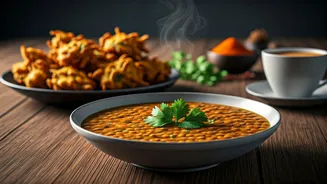
No matter which side of the Samosa vs. Pakora fence you land on, there's one thing everyone can agree on: none of it is complete without a steaming cup of Masala Chai. [24] This spiced tea is the ultimate companion, the thread that ties the entire monsoon experience together. [27] The pairing of hot chai with a crispy, fried snack is a cultural touchstone that gained widespread popularity in the mid-20th century. [17] The warmth and spice of the ginger and cardamom in the tea cut through the richness of the snacks, creating a perfect harmony of flavours. [22] Chai is a symbol of hospitality and comfort, turning a simple snack into a cherished ritual. [24, 27]