







The Blueprint: The Baahubali Saga
It all started with one question that gripped the nation: “Why did Kattappa kill Baahubali?”. But S.S. Rajamouli’s two-part epic did more than create a pop-culture moment; it created the pan-Indian blueprint. Released in 2015 and 2017, the Baahubali films
were a high-budget gamble that paid off spectacularly, proving that a Telugu film, if mounted on a grand scale with universal emotional themes, could dominate the entire Indian box office. Baahubali 2: The Conclusion became the first Indian film to gross over ₹1,000 crore, setting a new benchmark for success. By blending Indian mythology with state-of-the-art VFX and powerful storytelling, Rajamouli showed that audiences were hungry for homegrown spectacles that could rival Hollywood. It wasn't just a film; it was a national event that laid the commercial and creative groundwork for everything that followed.
The Rise of the Raw Hero: KGF and Pushpa
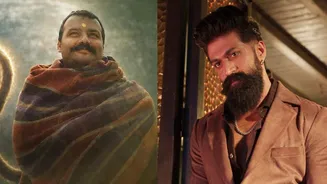
Following Baahubali's lead, a new type of hero emerged: grittier, more rebellious, and rooted in the rugged realities of the common man. From Kannada cinema came Yash as Rocky Bhai in the K.G.F. franchise, a charismatic underdog who builds an empire from the dust of gold mines. K.G.F: Chapter 2 not only became the highest-grossing Kannada film ever but also the fourth Indian film to cross the ₹1,000 crore mark worldwide. Similarly, Telugu cinema's Pushpa: The Rise introduced Allu Arjun as a red sandalwood smuggler whose swagger and defiance won hearts across the country. These films proved that the pan-Indian formula wasn't limited to mythological epics. A compelling, high-octane story about a powerful anti-hero could be just as effective at uniting audiences, with their dialogues and mannerisms becoming viral sensations.
The Global Spectacle: RRR
After creating the blueprint, S.S. Rajamouli returned to perfect it with RRR. This fictional tale of two real-life freedom fighters, played by Ram Charan and Jr NTR, was a cinematic explosion of bromance, patriotism, and jaw-dropping action. RRR took the pan-Indian model global, earning not just over ₹1,200 crore worldwide but also critical acclaim in the West, culminating in an Oscar for its infectious song 'Naatu Naatu'. The film demonstrated that the core tenets of these sagas—larger-than-life heroes, a strong emotional core, and breathtaking visual sequences—had an appeal that transcended not just regional but international borders. It solidified the idea that Indian stories, told with conviction and scale, could compete on the world stage.
The Unifying Formula
What do all these record-shattering sagas have in common? The recipe for a pan-Indian blockbuster seems to blend a few key ingredients. First is the sheer scale—massive budgets that translate into stunning visuals, elaborate sets, and world-class action sequences that demand to be seen on the big screen. Second is a universally resonant emotional core, often drawing from themes of justice, family, rebellion, or mythology that connect with audiences regardless of language. Finally, these films are unapologetically 'masala'—a potent mix of action, drama, romance, and music. They are marketed as national events, with strategic multi-language releases and promotional tours that create a sense of collective excitement. It’s a formula that respects regional identity while aiming for national appeal, proving that a good story, well told, has no linguistic barriers.