







What Makes Early October So Special?
The main event happens on October 4, 2026, when Saturn reaches what astronomers call “opposition”. This is the point in its orbit where Earth passes directly between Saturn and the Sun. Think of it as a celestial alignment that puts Saturn on the opposite
side of the sky from the Sun. This has two major effects for us here on Earth. First, the planet is at its closest approach to us for the year, making it appear larger and more brilliant than at any other time. Second, since it's opposite the Sun, Saturn will rise in the east around the same time the Sun sets in the west, remain visible throughout the entire night, and set as the Sun rises. There's even a bonus phenomenon known as the “opposition surge” or Seeliger effect. For a few days around opposition, the icy particles that make up Saturn's rings reflect sunlight directly back at us, making the rings appear noticeably brighter than the planet itself.
When and Where to Look From India
For skywatchers in India, the timing is perfect. On the night of October 4th, Saturn is expected to rise above the eastern horizon around 6:11 PM IST. It will travel across the sky, reaching its highest and clearest point around 12:17 AM, before setting in the west at about 6:23 AM the next morning. You don’t have to wait for the exact moment of opposition; the entire first week of October offers fantastic viewing opportunities. To find it, look for a bright, steady, golden-hued point of light in the eastern sky after sunset. Unlike stars, it won’t twinkle. Saturn will be in the constellation Cetus (the Whale), a relatively dim area of the sky, which makes the planet stand out even more. An easy way to locate it is to find the large, four-star pattern known as the Great Square of Pegasus; Saturn will be shining brightly below it.
A Telescope, Binoculars, or Just Your Eyes?
The beauty of this event is that it’s accessible to everyone, regardless of equipment. With just your naked eye, Saturn will be clearly visible as a bright, yellowish “star”. Its steady glow makes it easy to distinguish from actual stars. If you have a standard pair of binoculars, you might notice that the point of light appears slightly elongated or oval-shaped, a hint that you're not just looking at a simple dot. However, to truly witness the planet's famous feature, you will need a telescope. The good news is that even a small, modest backyard telescope is powerful enough to reveal the rings as distinct from the planet. With a magnification of about 50x, the sight of those icy rings circling a distant world becomes a reality. If you have access to a larger instrument (around 6 inches or 150mm), the view becomes even more spectacular.
What You Can Expect to See
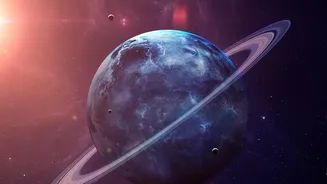
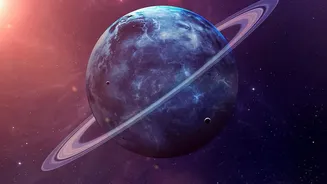
That first telescopic glimpse of Saturn is a moment most people never forget. Through a small telescope, you will see a small, perfect orb flanked by its incredible ring system. This year’s opposition is special because the rings are tilted towards us at an angle of about 7.5 to 10 degrees, after having appeared nearly edge-on and invisible in 2025. This tilt makes them clearly visible again. With a more powerful telescope and steady air, you might even be able to spot the Cassini Division, a dark gap that separates the main rings. Look closely for a tiny, star-like point of light near the planet—that is likely Titan, Saturn's largest moon, which is often visible in amateur telescopes. Seeing these features with your own eyes, across a distance of more than a billion kilometres, is a truly humbling experience.
Tips for the Best Viewing Experience
To make the most of this celestial opportunity, a little preparation goes a long way. First, try to get away from bright city lights. The darker your location, the more vivid Saturn will appear. Find a spot with an unobstructed view of the eastern horizon. Give your eyes at least 15-20 minutes to fully adapt to the darkness; this will dramatically improve what you can see. While you can see the planet all night, the view is often sharpest when it's highest in the sky, around midnight, as you're looking through less of Earth's turbulent atmosphere. The weather is a key factor, so check your local forecast for a clear night. Thankfully, the Moon won't be a problem, as it will be a slim, waning crescent during this prime viewing week, ensuring dark skies. Don't feel pressured to look only on October 4th; any clear night from late September through the first half of October will provide a memorable view.