






During Navratri this year, a fascinating trend emerged from India's kitchens and smartphones: a 36.4% jump in traditional sweet orders on Swiggy. This isn't just a statistic; it’s a story about how technology is reshaping our oldest traditions.
The Numbers Behind the Cravings
The festive
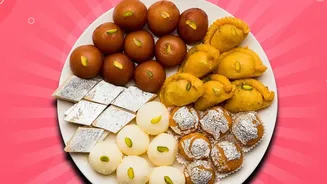
period surrounding Navratri and Durga Puja in 2026 saw a significant behavioural shift among Indian consumers. According to data from on-demand convenience platform Swiggy, orders for traditional sweets surged by 36.4% between October 17 and 20 compared to the same festive window in 2025. This highlights a growing reliance on delivery apps not just for daily meals, but for core components of festive celebrations. The most ordered sweet across the nation was the beloved rasgulla, with an average of 495 orders placed every hour during this peak period. Following closely were other festive staples like gulab jamun, kaju katli, and jalebi, proving that when it comes to celebrations, classic tastes still reign supreme.
Fasting Meets Fast Delivery
It wasn’t just about indulgence; convenience for those observing Navratri fasts was a massive driver of orders. Swiggy delivered an average of 1,794 sabudana-based dishes every hour over the festive weekend of October 17 and 18. Sabudana khichdi and sabudana vada were the clear favourites for those seeking vrat-friendly meals. Cities like Mumbai and Bengaluru led the demand for sabudana khichdi, while Delhi and Bengaluru were top markets for complete Navratri Vrat Thalis. This trend shows that busy lifestyles are no longer a barrier to observing traditional dietary practices. Instead of spending hours in the kitchen, people are outsourcing the preparation, allowing them to participate in rituals without the associated labour. One user in Noida even placed a single order worth ₹11,072 for 13 Navratri thalis, underscoring the shift towards large, convenient festive orders.
A Trend Beyond the Metros
While major metropolitan areas like Delhi, Mumbai, and Bengaluru predictably drove a large volume of orders, the data reveals a deeper, more widespread trend. The growth in festive orders was not confined to Tier-1 cities. Emerging markets such as Patna, Dehradun, Jodhpur, and Thiruvananthapuram showed significant demand for traditional sweets. Even smaller towns like Agartala, Shillong, and Palwal contributed to the surge. This nationwide adoption signals a fundamental change in consumer behaviour. Access to platforms like Swiggy is enabling people across the country to celebrate in similar ways, bridging the gap between urban convenience and traditional practices that were once heavily dependent on home-cooking or local market access.
Tradition with a Modern Twist
The data also offers a glimpse into how tradition is being reinterpreted. While classic mithai dominated, some orders showed a flair for the contemporary. One of the highest-value sweet orders, from a customer in Mumbai, was worth ₹9,870 and included an assortment of traditional mithais alongside a 'Coffee Rasgulla Tiramisu'. This fusion dessert perfectly encapsulates the modern Indian festive spirit: a deep appreciation for traditional flavours combined with a playful openness to new culinary experiences. Food delivery platforms are not merely facilitating access to old favourites; they are also becoming a marketplace for innovation, where chefs and businesses can test creative, festival-themed dishes that blend the best of both worlds.
The New Festive Economy
This surge in online food orders during Navratri is more than a fleeting trend; it’s a snapshot of the new festive economy. For consumers, these platforms offer unparalleled convenience, variety, and the ability to uphold traditions despite hectic schedules. For thousands of local restaurants, sweet shops, and home chefs, these apps provide a vital lifeline, connecting them to a massive customer base during their most crucial business periods. The logistical feat of managing millions of orders for everything from single sweets to elaborate thalis demonstrates how technology has seamlessly integrated itself into the fabric of cultural celebrations, fundamentally changing how India fasts, feasts, and celebrates.