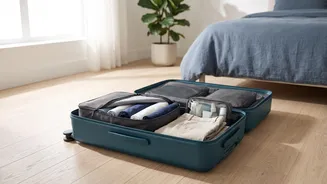








The Seven-Kilo Conundrum
Anyone who has flown with a budget airline knows the feeling: that moment of anxiety at the boarding gate when you see the weighing scale. Airlines, especially low-cost carriers, are increasingly strict about their 7kg hand baggage allowance. This isn't
just about collecting extra fees for overweight bags; it's also about managing limited overhead space and ensuring flight safety. For travellers, this limit presents a significant challenge. How do you pack for a week-long holiday or a business trip in a bag that weighs less than a sack of potatoes? It often leads to stressful pre-trip packing sessions, frantic repacking at the airport, and the dreaded possibility of paying hefty fees for a bag you intended to carry on for free. The struggle is real, but the solution is surprisingly simple.
Meet Your New Packing Hero
At first glance, compression cubes look like regular packing cubes: small, zippered fabric bags used to organize clothes. However, they have a game-changing feature: a second, outer zipper. This is the compression mechanism. You pack your clothes into the cube, close the main zipper, and then close the second zipper, which runs around the perimeter. As you zip it, it squeezes the cube, forcing out excess air and reducing the overall volume of the contents. Unlike vacuum bags, they don't require a pump and are made of durable but lightweight fabrics like nylon or polyester, making them perfect for repeated use.
How They Master Space, Not Weight
The magic of compression cubes lies in their ability to tackle bulk. They work best on soft, puffy items like T-shirts, sweaters, and jackets, which have a lot of air trapped in their fibres. By expelling this air, the cubes can reduce the volume of your clothing by up to 30% or more. This turns a loose pile of clothes into a dense, compact brick that takes up significantly less room in your suitcase. However, it's crucial to understand a key limitation: compression cubes save space, not weight. Your clothes will weigh the same whether they are compressed or not. The advantage is that by freeing up so much space, you gain more control over how you distribute that 7kg limit, making it easier to pack everything you need without your bag bursting at the seams.
A Guide to Smart Compression
Using compression cubes effectively is an art. For best results, roll your clothes tightly before placing them inside; this minimises wrinkles and maximises space. Don't overstuff a cube. A cube that is about 80% full will compress more effectively than one that is stretched to its limit. Once packed, close the main zipper, then slowly and carefully close the compression zipper. You can use a finger to guide the fabric away from the zipper track to prevent snagging. Arrange the compressed cubes in your carry-on like a game of Tetris, placing heavier cubes at the bottom near the wheels for better balance. This modular approach not only saves space but also keeps your bag incredibly organized.
Beyond the Squeeze
The benefits of compression cubes extend beyond just saving space. They are fantastic organizational tools. You can categorize your packing—tops in one cube, bottoms in another, and underwear in a third. This makes finding an outfit a breeze without having to rummage through your entire bag. Upon arrival, you can simply transfer the cubes directly into hotel drawers. Many travellers use one cube to separate dirty laundry during the trip, keeping it isolated from clean clothes. This level of organization simplifies both packing and unpacking, saving you time and hassle on your journey.
Packing Smart to Stay Underweight
Since compression cubes don't reduce weight, you still need a smart strategy to stay under the 7kg limit. Start with a lightweight backpack or suitcase, ideally one that weighs under 1.5kg. Wear your heaviest items—like jeans, a jacket, and boots—on the plane. Decant all your liquids into travel-sized bottles under 100ml. Choose versatile, lightweight fabrics and avoid bringing items 'just in case'. Finally, invest in a small digital luggage scale. A quick weigh-in at home saves you from any unpleasant surprises and financial penalties at the airport check-in counter.