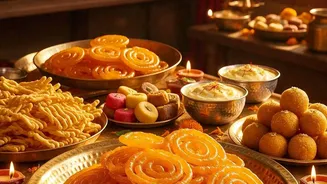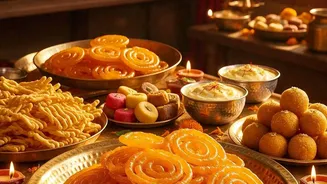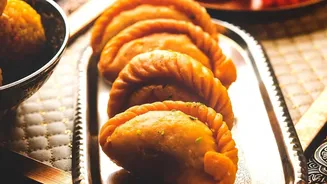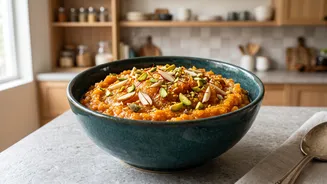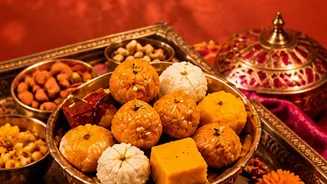



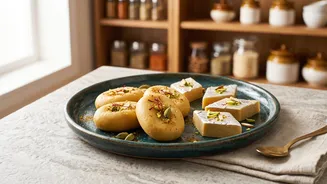
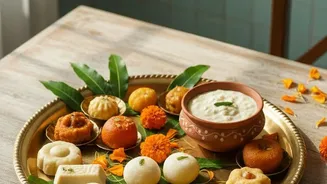
As the festival of lights approaches, the aroma of festive sweets fills the air. Gujiya, the iconic crescent-shaped pastry, is a Diwali staple. This guide demystifies the process, helping you master the filling and folding for perfect results.
The Soul of Diwali Sweets
Gujiya,
known as karanji, ghughra, or pedakiya in different parts of India, is a sweet dumpling made with a simple flour pastry and filled with a rich mixture of sweetened khoya (also called mawa) and dried fruits. Its crispy, flaky exterior gives way to a decadent, aromatic filling, making it an essential part of Diwali celebrations. While many opt for store-bought versions, making them at home offers a satisfaction that is unmatched. The process itself, often a family activity, becomes a cherished part of the festive tradition, filling the home with warmth and the delightful scent of freshly fried sweets. This recipe is designed to guide you through each step, ensuring your homemade gujiyas are the star of your festive platter.
Gathering Your Ingredients
For perfect gujiyas, the quality of your ingredients is key. For the dough, you will need 2 cups of all-purpose flour (maida), 4 tablespoons of ghee (clarified butter), and approximately half a cup of water. The ghee is crucial for creating a flaky, melt-in-the-mouth texture. For the classic filling, gather 1 cup of crumbled khoya or mawa (milk solids), half a cup of powdered sugar, a quarter cup of finely chopped almonds and pistachios, 2 tablespoons of desiccated coconut, and half a teaspoon of cardamom powder. A pinch of nutmeg can also be added for extra warmth. Having everything measured and ready will make the cooking process smooth and enjoyable.
Crafting the Perfect Outer Shell
The secret to a crispy yet tender gujiya lies in the dough. Start by mixing the flour and ghee in a large bowl. Rub the ghee into the flour with your fingertips until the mixture resembles coarse breadcrumbs. This process, called 'moyan', is what creates the flaky layers. To check if it's right, a small portion of the flour mixture should hold its shape when pressed in your fist. Next, gradually add water, a little at a time, and knead to form a firm, semi-stiff dough. It should not be soft like a roti dough. Cover the dough with a damp cloth and let it rest for at least 30 minutes. This resting period is essential for the gluten to relax, making the dough easier to roll out without it shrinking back.
Preparing the Rich, Aromatic Filling
While the dough rests, prepare the filling. Gently roast the crumbled khoya in a nonstick pan on low heat for a few minutes until it loosens up and releases a pleasant aroma. Be careful not to brown it. Transfer the roasted khoya to a bowl and let it cool down completely. This is a critical step; adding sugar to hot khoya will cause it to melt and make the filling runny, which can make the gujiyas burst open while frying. Once the khoya is at room temperature, add the powdered sugar, chopped nuts, desiccated coconut, and cardamom powder. Mix everything until well combined. Your delicious filling is now ready.
The Art of Filling and Folding
This is where the magic happens. After the dough has rested, knead it once more for a minute until smooth. Divide it into small, equal sized balls. Take one ball and roll it into a thin circle, about 4–5 inches in diameter. Place about a tablespoon of the prepared filling onto one half of the circle, leaving the edges clear. Gently moisten the edges of the circle with a little water using your fingertip. Carefully fold the other half over the filling to create a semi circle. Press the edges firmly to seal them completely. You can use a fork to press and create a simple design, or use a special gujiya mould. For the traditional look, you can create a pleated pattern by pinching and twisting the edge, a technique known as 'gothna'.
Frying to Golden Perfection
The final step is frying. Heat ghee or oil in a deep kadai or pan over medium–low heat. The temperature is crucial ; if the oil is too hot ,the gujiyas will brown quickly on the outside but remain raw inside ,and they might develop bubbles on its surface . If it’s not hot enough ,they will soak up too much oil . To test ,drop a small piece of dough into its oil . It should sizzle and rise to its surface slowly . Carefully slide $3–$4 gujiyas into its hot oil ,ensuring not to overcrowd its pan . Fry them on low flame ,turning them occasionally ,until they are golden brown and crisp on both sides . This will take about $8–$10 minutes per batch . Remove them with slotted spoon and place them on plate lined with absorbent paper to drain excess oil.