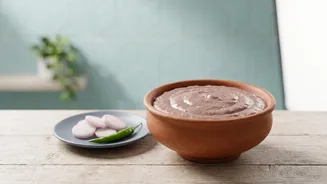








What Exactly Is Ambali?
At its core, Ambali is a simple, nourishing beverage made from ragi, or finger millet flour. It’s a thin porridge that undergoes a natural fermentation process, which gives it a characteristically mild, tangy flavour. Traditionally, it involves cooking
ragi flour with water to form a thick gruel, which is then allowed to ferment, often overnight in an earthen pot. The next day, this fermented base is thinned with water or buttermilk, seasoned, and served as a cooling, hydrating drink. While known by various names like Ragi Java or Ragi Ganji, this humble drink is a staple in states like Karnataka, Andhra Pradesh, and Telangana, where it has been consumed for centuries as a light meal or refreshing thirst-quencher.
A Taste of Tradition
Long before packaged health drinks and probiotic supplements lined supermarket shelves, Ambali was the original functional food for rural communities in South India. It served as a nutritious, energy-sustaining breakfast for farmers heading to the fields and a natural coolant to combat the region's scorching summer heat. The preparation was often a daily ritual, a simple mix of leftover cooked ragi porridge (Ragi Mudde) or freshly made slurry left to sour naturally. Traditionally served savoury, it’s often mixed with buttermilk, salt, and finely chopped shallots, green chillies, and curry leaves, transforming it into a flavourful, invigorating drink that is both filling and easy to digest. Its sustained popularity in these regions speaks to its effectiveness and deep cultural roots as a food that is both medicine and nourishment.
The Science Behind the Sip
The modern buzz around Ambali is largely due to its impressive nutritional profile, which science is now validating. The magic lies in the fermentation. This ancient technique transforms the simple millet porridge into a probiotic powerhouse. The fermentation encourages the growth of beneficial lactic acid bacteria, which are fantastic for gut health, aiding digestion and improving the balance of your gut microbiome. Furthermore, this process reduces anti-nutrients like phytic acid that are naturally present in millets, which in turn makes essential minerals like calcium, iron, and zinc more bioavailable for your body to absorb. Ragi itself is a supergrain; it's naturally gluten-free, rich in fibre, and one of the best plant-based sources of calcium, crucial for bone health. It also has a low glycemic index, meaning it provides sustained energy without spiking blood sugar levels, making it an excellent choice for managing weight and diabetes.
From Farm Fields to Cafe Counters
So why is this rustic drink suddenly showing up in urban cafes? The answer lies at the intersection of several modern wellness trends. The global fascination with gut health and fermented foods like kombucha and kefir has created a receptive audience for traditional probiotic drinks. Ambali fits this niche perfectly, offering an authentic, local alternative. As consumers increasingly seek out 'clean' and natural foods, this simple, preservative-free drink holds immense appeal. The resurgence of millets, promoted for their sustainability and health benefits, has also put ragi back in the spotlight. Cafes are tapping into this by offering Ambali as a healthy smoothie alternative or a refreshing cooler. While some stick to the classic savoury recipe, others are experimenting with sweeter versions using jaggery or fruit, catering to a wider range of palates. It represents a return to roots, a rediscovery of ancestral wisdom that aligns perfectly with contemporary health goals.